

ESG Strategy
This ESG Report covers the period from 1 January to 31 December 2025 and presents Danaos’ environmental, social and governance performance with transparency, accountability and alignment to internationally recognized frameworks and evolving regulatory requirements. Sustainability is embedded in our corporate governance structure and decision-making processes. Our ESG strategy, overseen at Board and senior management level, is integrated into our enterprise risk management framework and informed by materiality assessments and stakeholder engagement. It serves as a roadmap toward 2030, strengthening resilience, operational excellence and long-term value creation in a rapidly evolving maritime landscape.
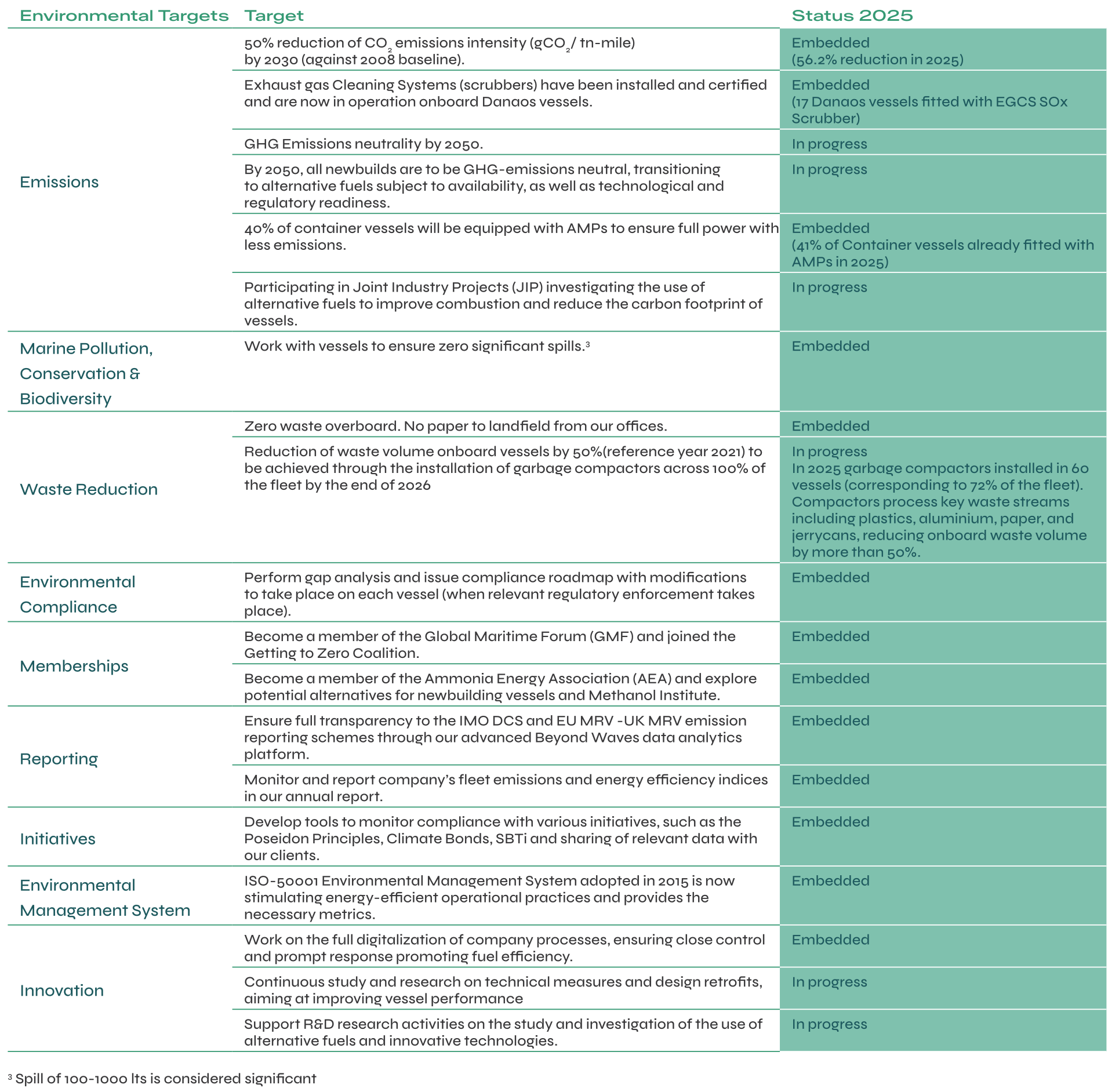
At the core of our environmental commitment lies the Danaos Low Carbon Transition Plan (LCTP), first published in 2022 and updated annually to reflect regulatory developments and market conditions. The LCTP defines our decarbonization pathway aligned with the 1.5°C ambition and targets exceeding current IMO requirements. Our key objectives include:
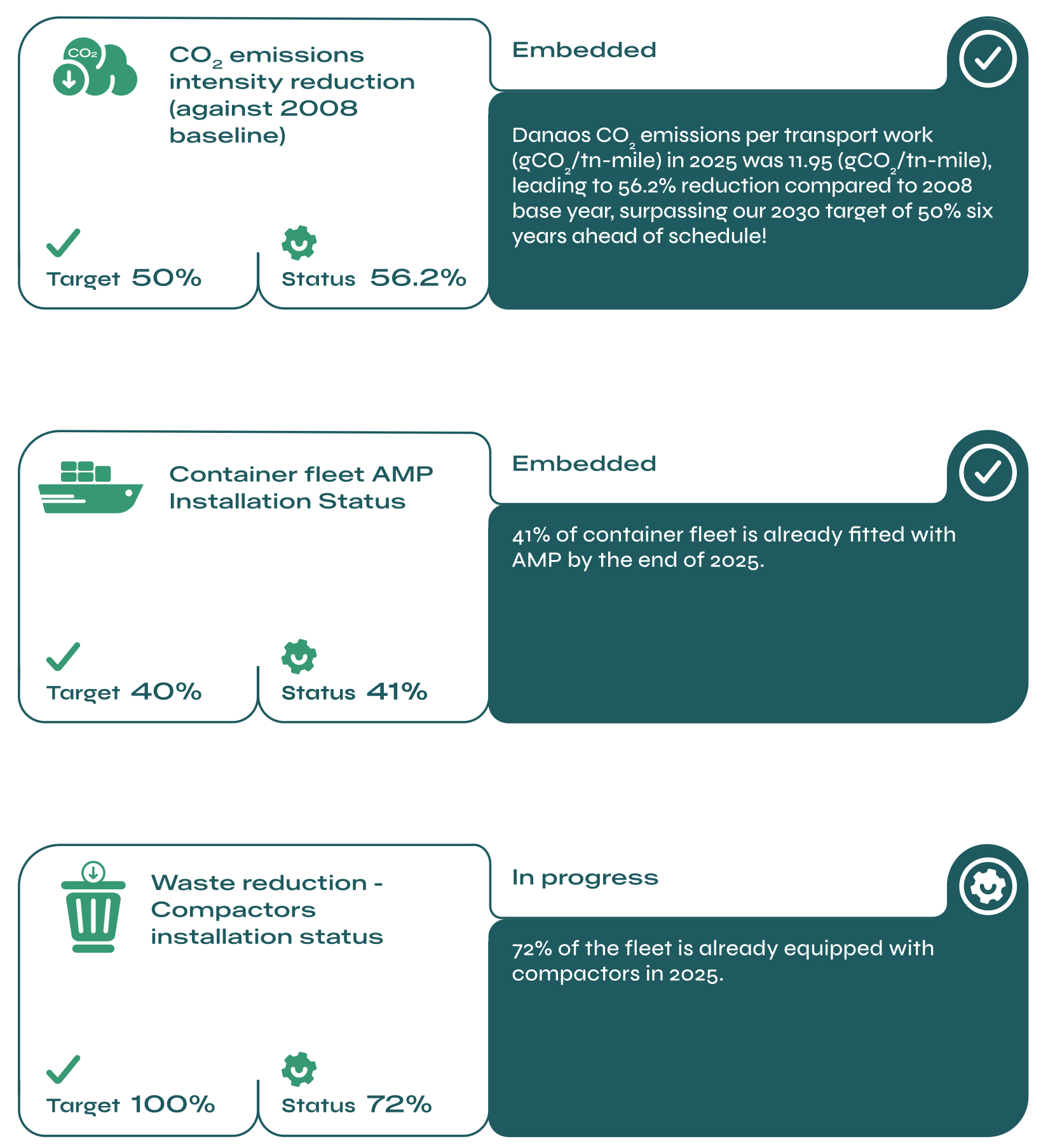
- 50% reduction in Energy Efficiency Operational Index (EEOI) by 2030 compared to 2008 levels
- Long-term ambition to achieve GHG emissions neutrality by 2050
To achieve these goals, we focus on fleet modernization, energy-efficiency technologies, process optimization and supplier engagement. Investment decisions are supported by Shadow Carbon Pricing, and our decarbonization targets are aligned with climate science and a 1.5°C pathway, reinforcing credibility and scientific rigor.
Since 2023, we report to the S&P Global Corporate Sustainability Assessment (CSA). In 2025, we achieved a CSA score of 62, ranking in the top 7% of the Transportation and Transportation Infrastructure sector and in the top 3% of the Environmental pillar. Danaos is proud to be recognized in The Sustainability Yearbook 2026. In 2025, we further enhanced our transparency through CDP disclosures, scoring B for Climate, B for Water, and our Supplier Engagement Rating score is A-. Since 2022, we have implemented a structured ESG questionnaire for suppliers, strengthening supply chain due diligence.
Materiality Assessment
In 2025, we advanced our Double Materiality Assessment (DMA) to reflect a rapidly evolving sustainability and regulatory landscape and to sharpen how we translate ESG insights into business decisions. Beyond identifying what matters most to our stakeholders, the 2025 DMA strengthened our ability to anticipate and manage emerging risks and opportunities across the full value chain.
Danaos’ Double Materiality Assessment (DMA) methodology:
- Step 1: identified and grouped stakeholders: internal decision-makers and external parties (employees, charterers, crew, financial institutions, flag states, classification societies, insurers, shipyards, NGOs, and suppliers).
- Step 2: ran a qualitative survey across all groups. Topics were based on GRI Standards and expanded with SASB Transportation-Marine Transportation risks and opportunities.
- Step 3: had C-Suite and Directors evaluate each topic’s physical or transition risks/opportunities and the potential impact on financial position and performance.
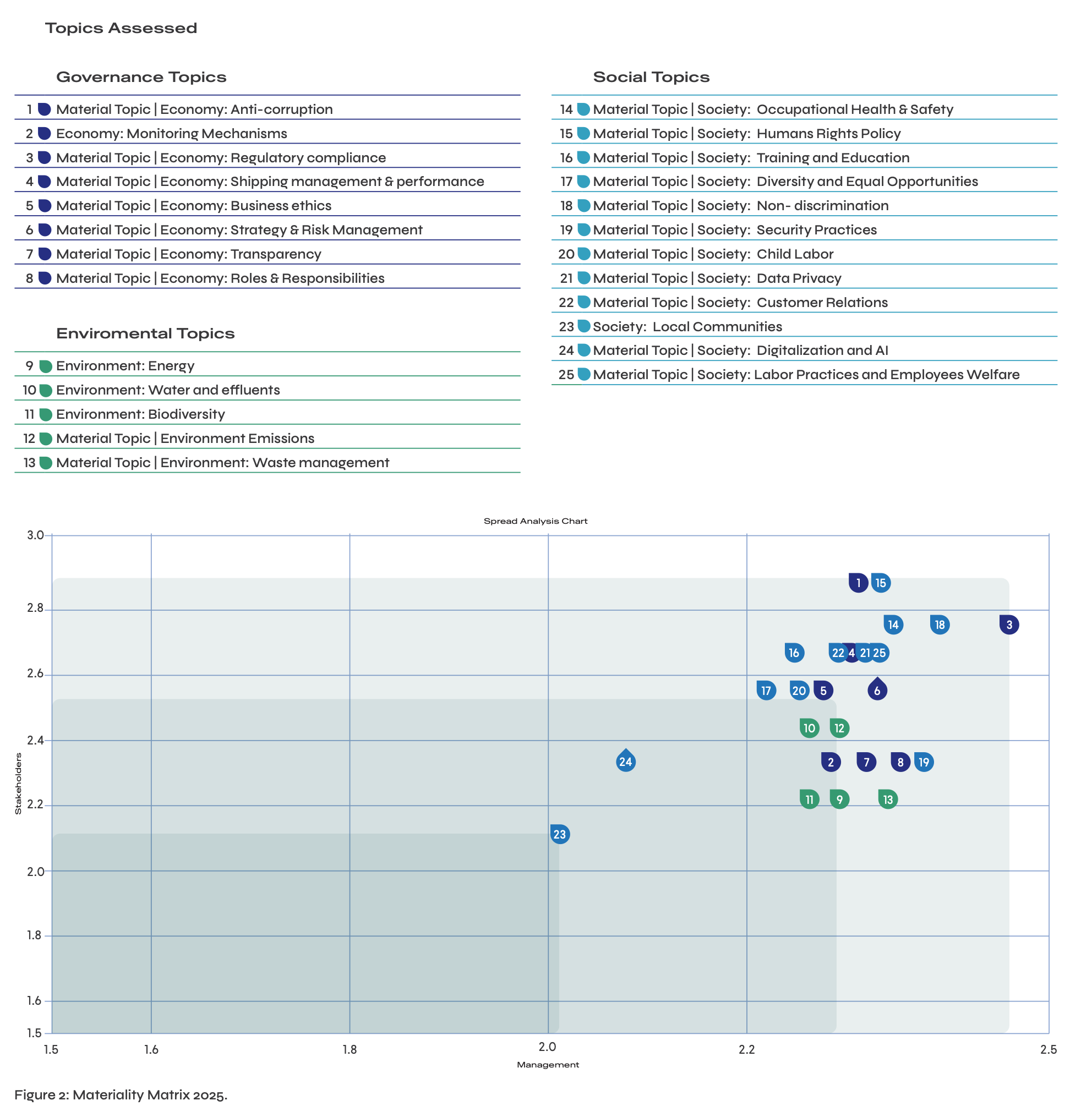
- Step 4: plotted results in a materiality matrix: stakeholder scores on the X-axis and leadership scores on the Y-axis.
- Step 5: benchmarked identified material issues against peer organizations.
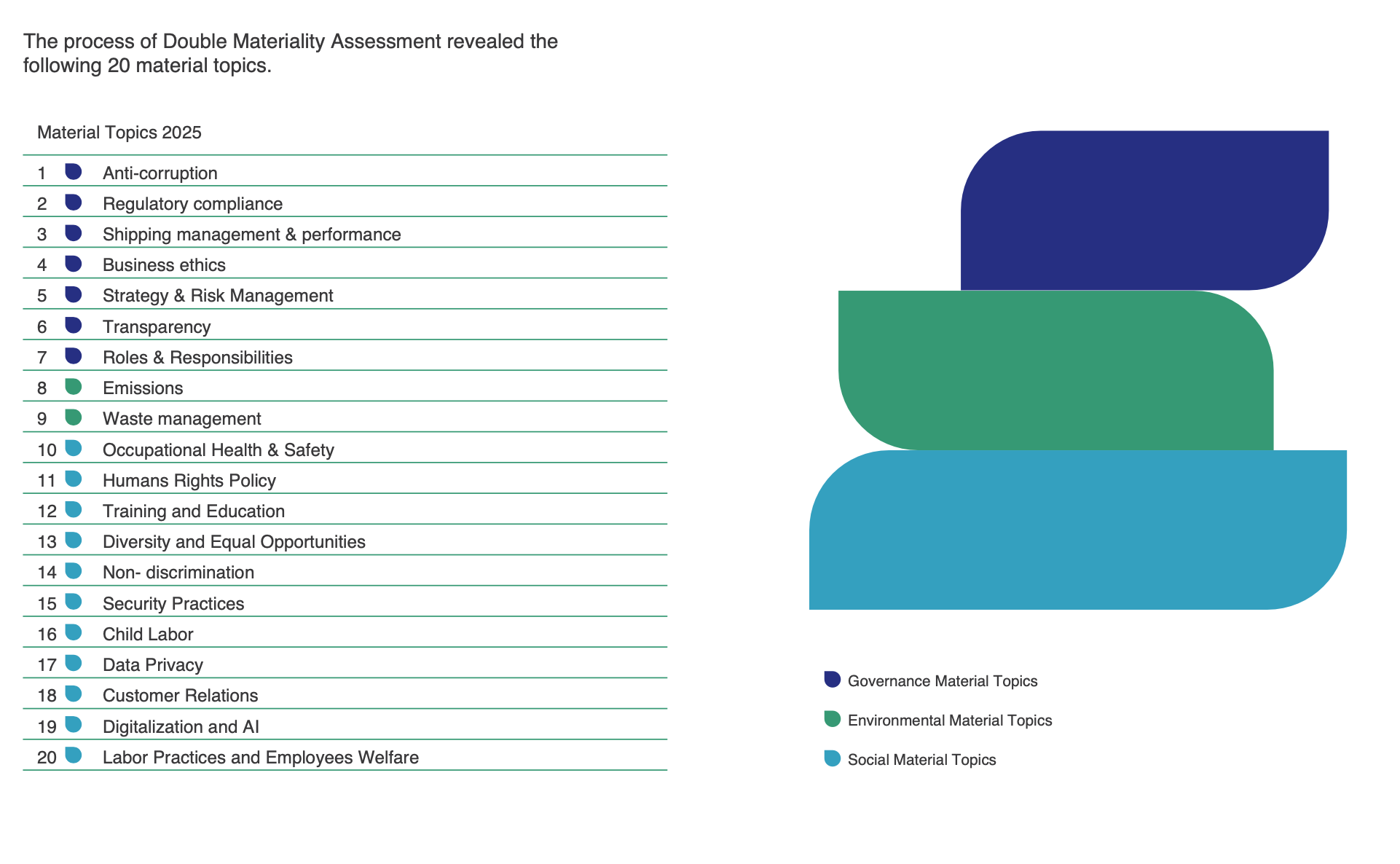
Material topics that were not identified as significant in 2025, but were considered material in 2023, included:
- Monitoring and Control Mechanisms
- Energy Management
- Water and Effluents
- Biodiversity
- Forced and Compulsory Labor
Conversely, several topics gained importance in 2025 despite not being identified as material in 2023, reflecting evolving industry priorities and stakeholder expectations. These included:
- Shipping Management and Performance
- Data Privacy
- Customer Relations
- Digitalization and Artificial Intelligence
- Labor Practices and Employee Welfare

Our Commitments - 2028 Goals in Progress
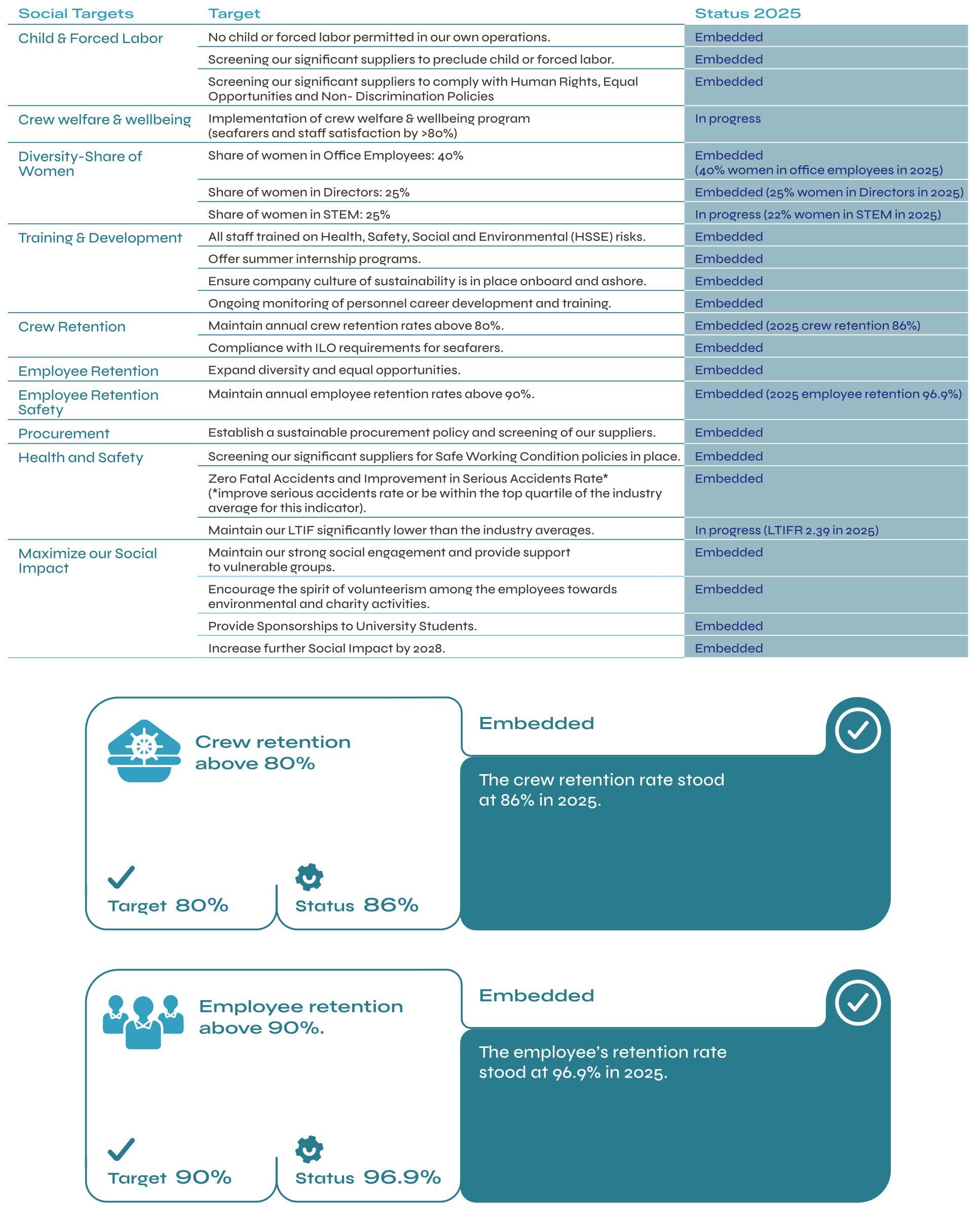
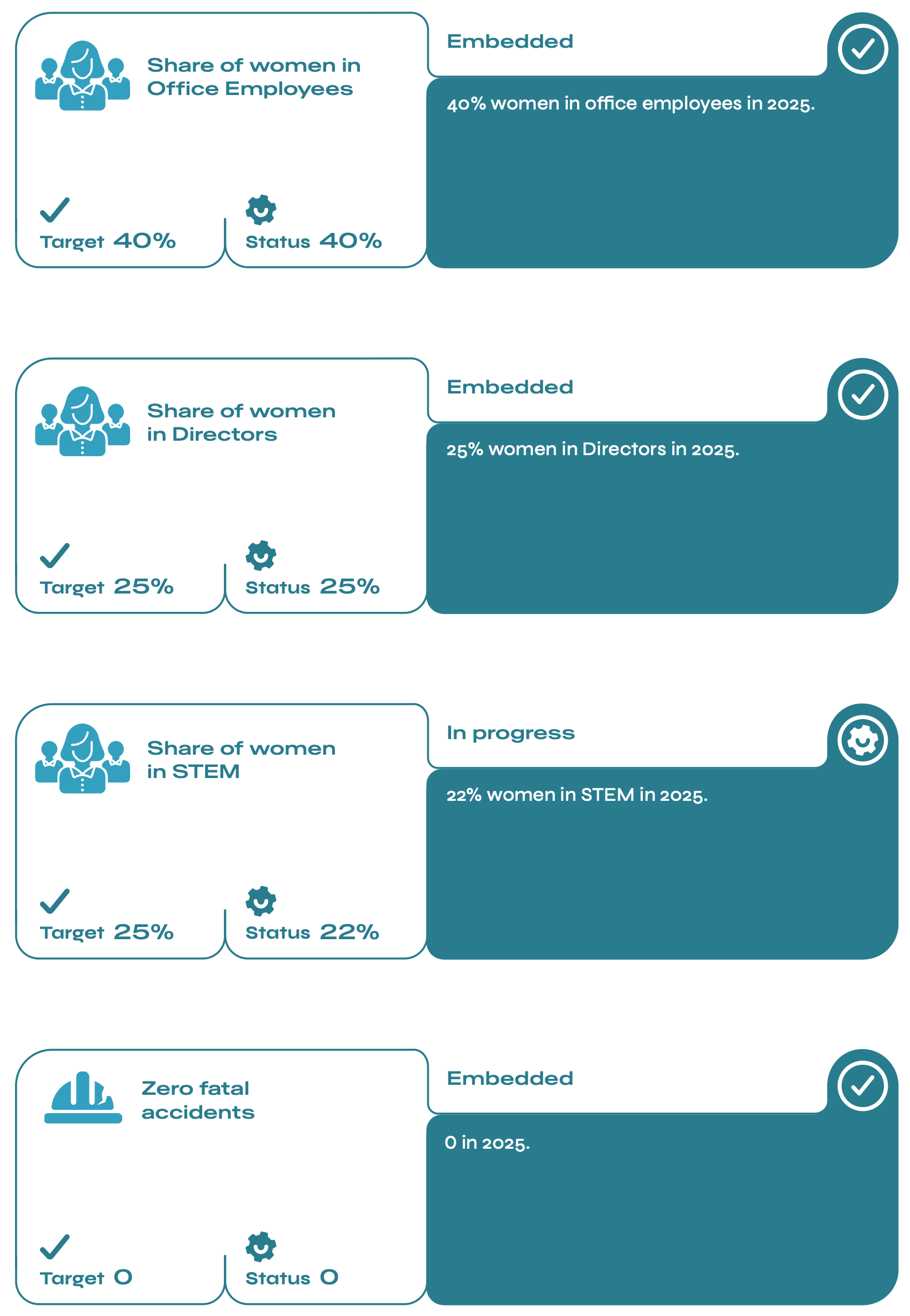
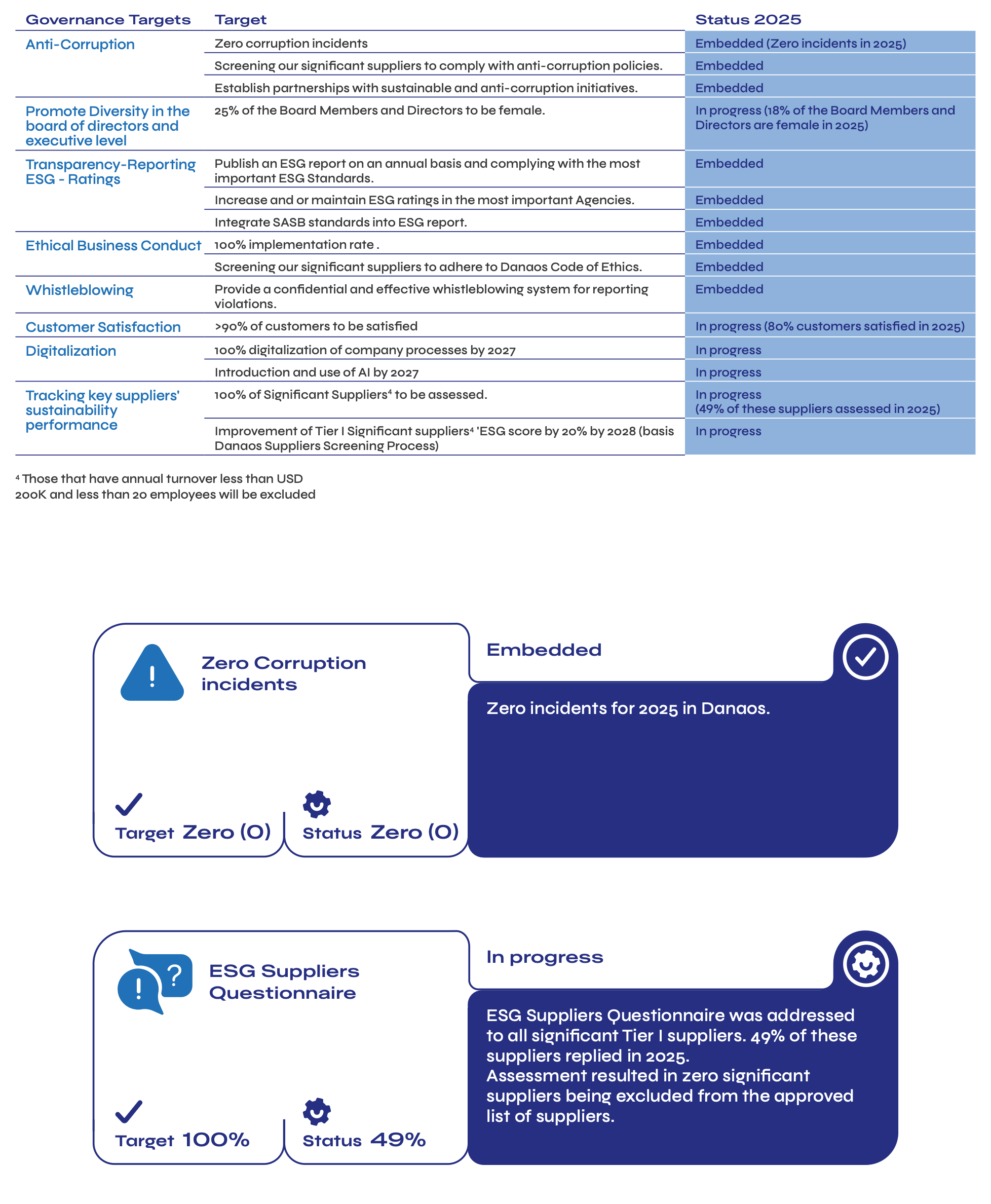
Our ESG Goals and Commitments to the SDGs
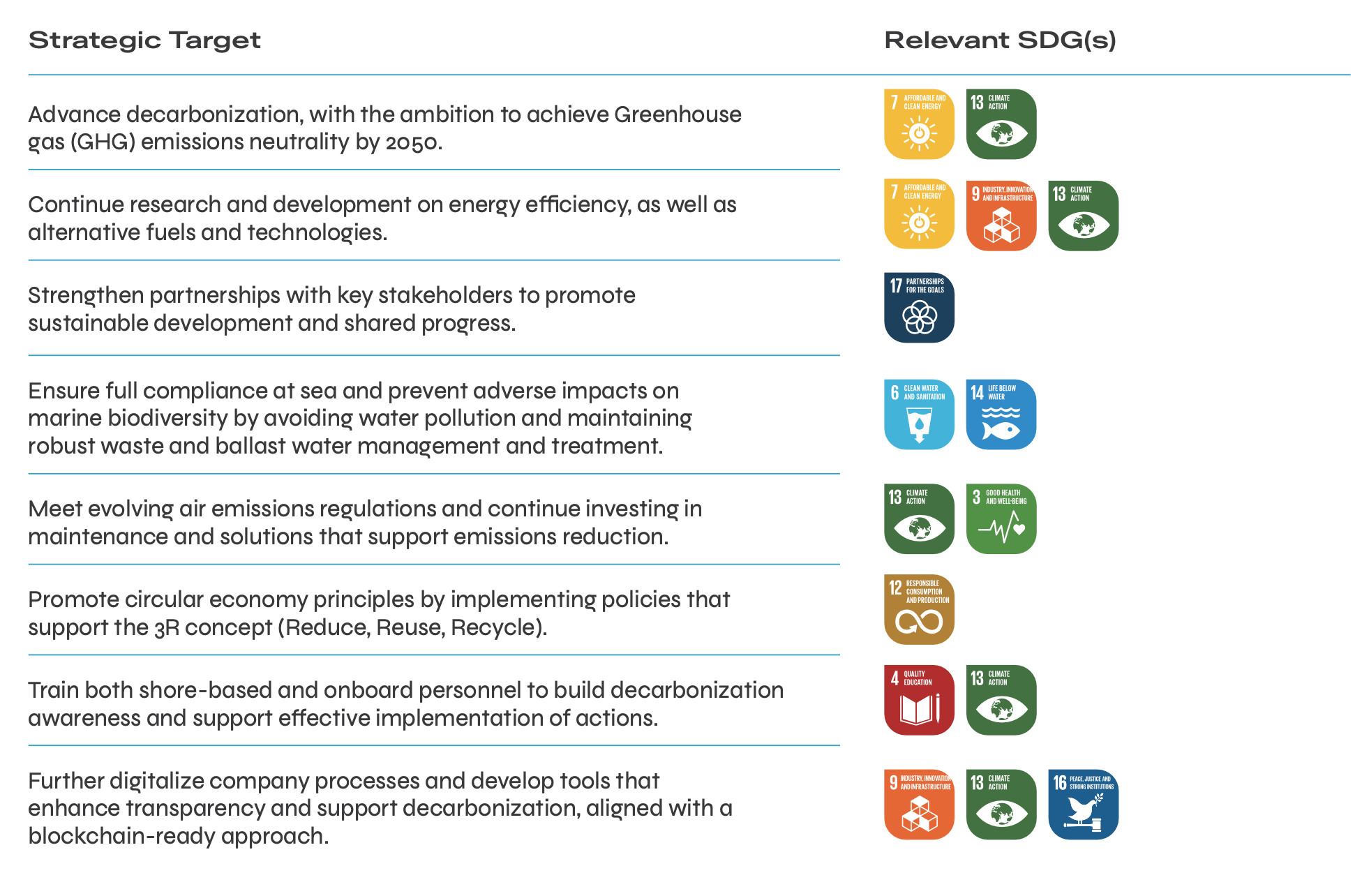
At Danaos, we are focused on aligning our key targets and future investments with the United Nations Sustainable Development Goals (SDGs) and our Environmental, Social and Governance (ESG) priorities. As part of a broader global value chain, we recognize our responsibility to contribute meaningfully to the UN 2030 Agenda—supporting efforts to eradicate poverty, protect the planet, address climate change, and promote peace and prosperity for all by 2030.
We have embedded the SDGs into our strategy by identifying those most relevant to our business and assessing how we can best strengthen our contribution through measurable actions and responsible decision-making.
Our ESG goals include:
- Strengthen partnerships with key stakeholders to promote sustainable development and shared progress.
- Ensure full compliance at sea and prevent adverse impacts on marine biodiversity by avoiding water pollution and maintaining robust waste and ballast water management and treatment.
- Meet evolving air emissions regulations and continue investing in maintenance and solutions that support emissions reduction.
- Promote circular economy principles by implementing policies that support the 3R concept (Reduce, Reuse, Recycle).
- Train both shore-based and onboard personnel to build decarbonization awareness and support effective implementation of actions.
- Further digitalize company processes and develop tools that enhance transparency and support decarbonization, aligned with a blockchain-ready approach.
- Advance decarbonization, with the ambition to achieve Greenhouse Gas (GHG) emissions neutrality by 2050.
- Continue research and development on energy efficiency, as well as alternative fuels and technologies.
The above commitments are primarily aligned with the following
United Nations Sustainable Development Goals (SDGs):
Stakeholder Engagement
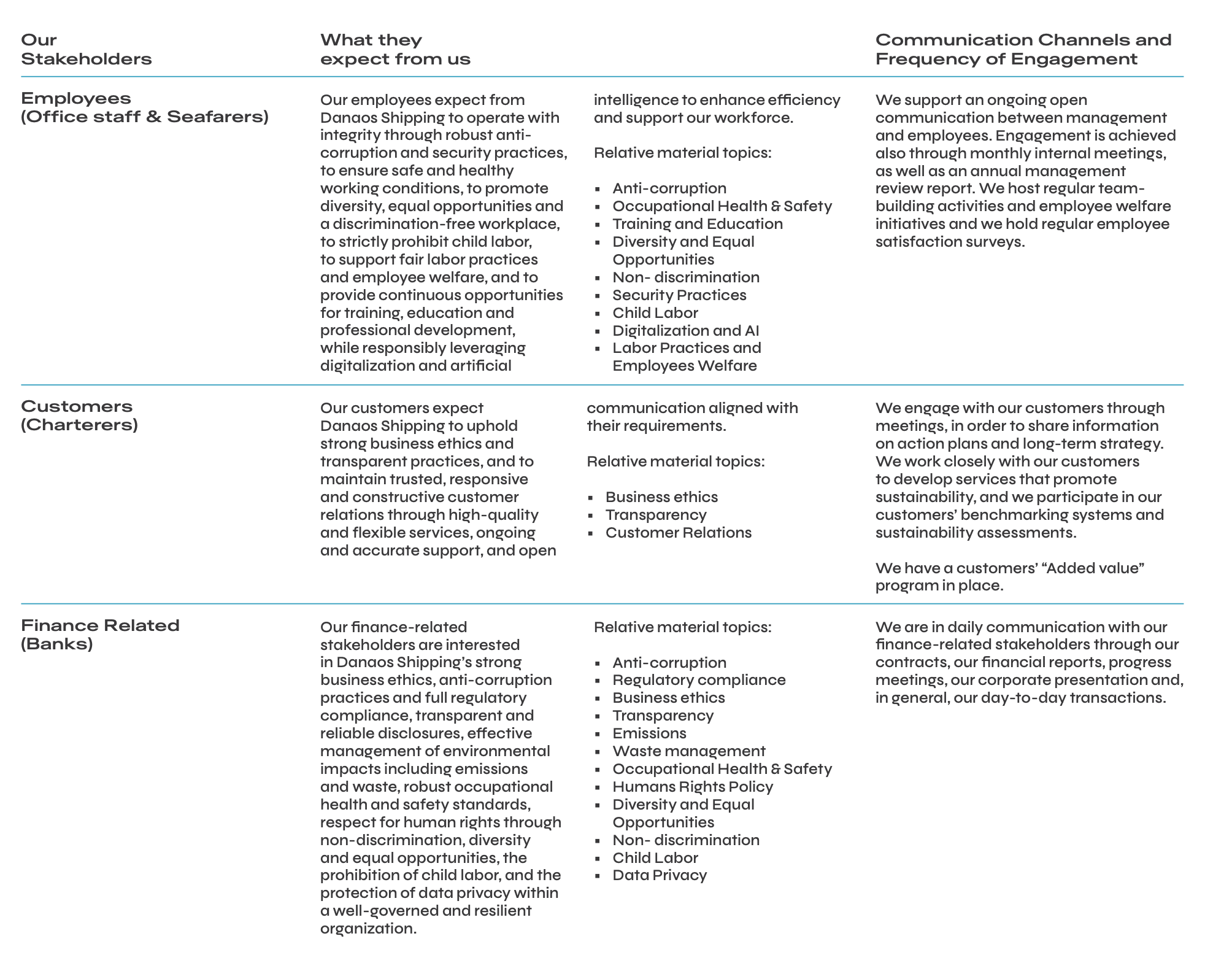
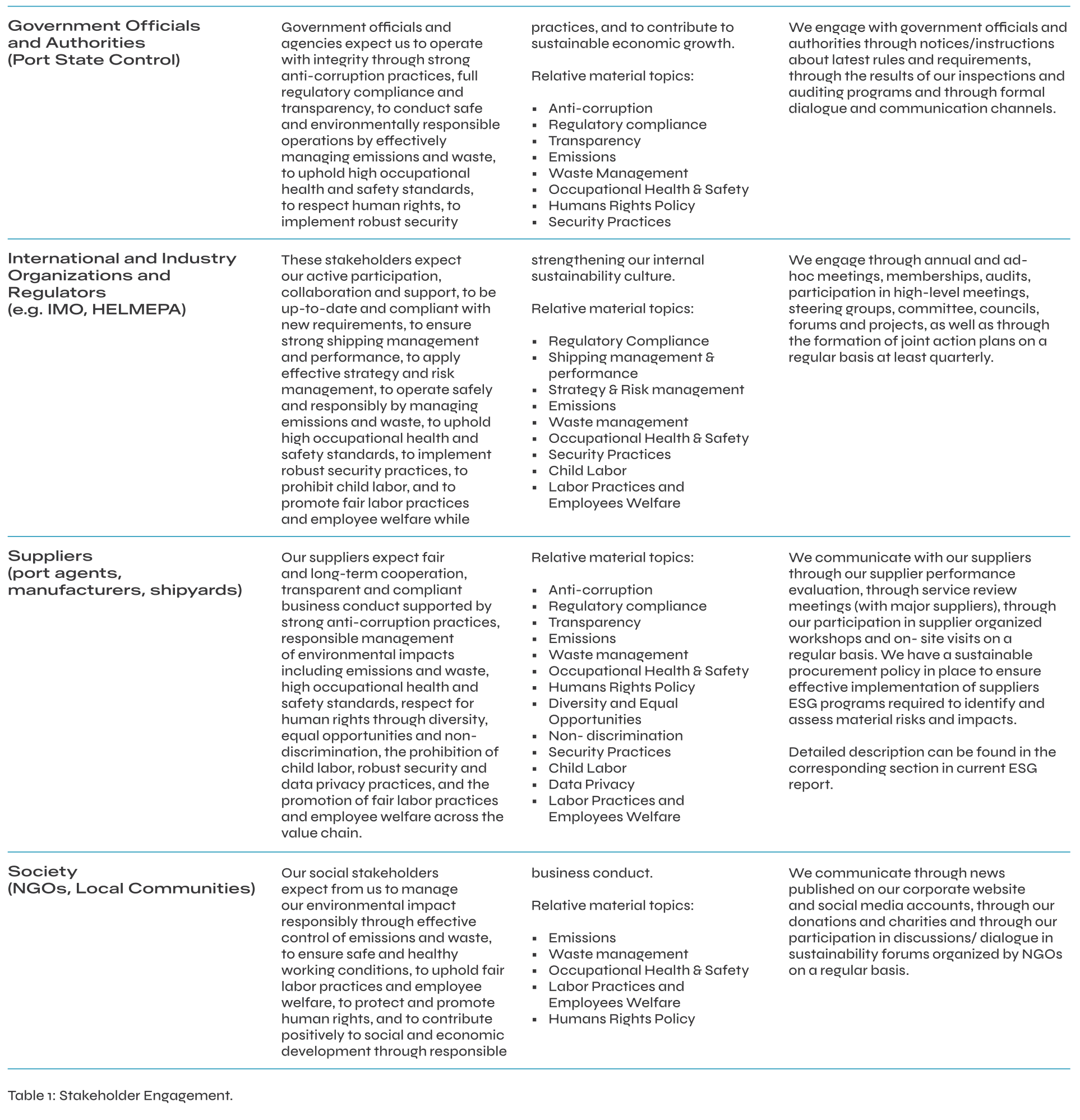
Stakeholder engagement is a cornerstone of Danaos’ strategic planning. To ensure a consistent and structured approach, we have established a Stakeholder Engagement Policy that sets out how we build and maintain meaningful relationships with our key stakeholder groups. Continuous, two-way communication is essential, enabling us to shape our actions and targets in a way that responds to stakeholder expectations, priorities, and concerns.
As part of this approach, we conduct regular materiality assessments, inviting stakeholders to assess and prioritize sustainability topics based on their significance. When determining whether an issue is material, we consider our impacts and dependencies across the value chain and draw on the perspectives of our principal stakeholders. We refresh this assessment annually to ensure it remains aligned with changes in our operations, stakeholder expectations, and the broader external context.
In parallel, we have introduced a customer satisfaction survey to better evaluate the effectiveness of our communication with this critical stakeholder group. By systematically addressing environmental, social, and governance (ESG) topics, we strengthen the foundation of our sustainability strategy and ensure our reporting and initiatives remain relevant, targeted, and action oriented.
Key Partnerships
Sharing expertise and collaborating with others in the sector is key to driving collective progress toward sustainability goals. We are actively pursuing membership in industry associations and committees in order to contribute to the progress of the shipping industry via the exchange of expertise, as well as the support and promotion of sustainability concerns.
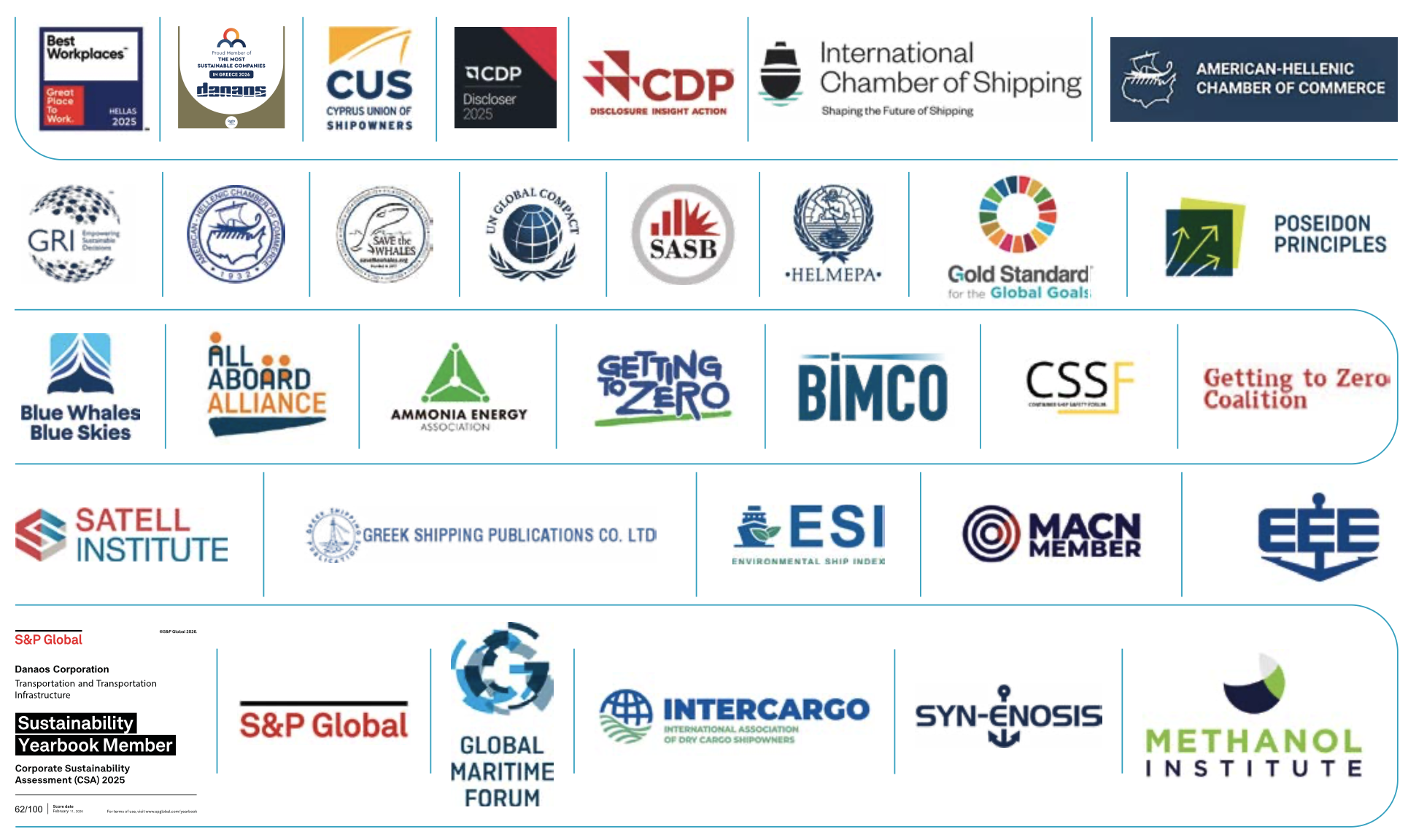
This year, Danaos is continuing and strengthening its external collaborations and voluntary initiatives that support responsible business practices, environmental stewardship, and progress toward the UN Sustainable Development Goals (SDGs).
United Nations Global Compact (UNGC): Following our official enrolment in 2024, we are continuing our participation in the UN Global Compact, reinforcing our commitment to align our policies and operations with its universal principles on human rights, labor standards, environmental protection, and anti-corruption. Through this platform, we remain engaged with stakeholders globally and contribute to collective action that advances the SDGs.
Danaos was recognized among “The Most Sustainable Companies in Greece 2026” by the QualityNet Foundation, reflecting the Company’s strong sustainability performance and its inclusion among leading companies distinguished for their ESG performance and commitment to sustainable business practices.
Global Maritime Forum (GMF) and the Getting to Zero Coalition: As a member of the Global Maritime Forum since 2020, we continue to support the Getting to Zero Coalition statement and remain actively involved in industry dialogue aimed at accelerating the transition to scalable zero-emission solutions for shipping.
Ammonia Energy Association (AEA): Building on our membership since July 2024, we are continuing our engagement with the Ammonia Energy Association by participating in meetings and staying current on developments related to ammonia as a potential marine fuel and pathway for decarbonization.

Danaos is continuing and strengthening its external collaborations and voluntary initiatives that support responsible business practices, environmental stewardship, and progress toward the UN Sustainable Development Goals (SDGs).
Methanol Institute (MI): In parallel, we participate in the Methanol Institute to support the company’s long-term alternative fuels strategy and planning of future newbuilding and retrofit decisions.
Environmental Ship Index (ESI): We remain voluntarily enrolled in the Environmental Ship Index, demonstrating our ongoing focus on improving vessel environmental performance and supporting customer sustainability priorities. By leveraging ESI data, we further enhance emissions-reduction planning, strengthen regulatory alignment, and reinforce client partnerships.
Poseidon Principles and Climate bond initiatives: This year, we continue to explore the Poseidon Principles and Climate bond initiatives as part of our broader effort to validate and assess our fleet’s alignment with evolving climate expectations and compliance requirements.
Biodiversity initiatives: “SAvE Whales” and “Blue Whales Blue Skies”: We are continuing measures to address biodiversity impacts by integrating areas identified under the “SAvE Whales” initiative into our Waves online fleet monitoring system, supporting the development of advanced alerting approaches aimed at reducing the risk of whale strikes. In parallel, we continue to apply a geofencing-like approach for the “Blue Whales Blue Skies” initiative and engage with clients whose chartered vessels operate in these regions, encouraging adherence to voluntary speed reduction measures.
Maritime Anti-Corruption Network (MACN): As an active member of the Maritime Anti-Corruption Network, we continue to support collective industry efforts to promote transparency, integrity, and fair business practices across the maritime sector. In alignment with our Anti-Bribery & Anti-Corruption (ABAC) Policy, we engage with MACN initiatives, tools, and best-practice guidance to strengthen our compliance framework, enhance risk awareness, and reinforce a zero-tolerance approach to bribery and corruption. Through this collaboration, we contribute to sector-wide dialogue and capacity-building actions aimed at eliminating corrupt practices and fostering ethical conduct throughout global shipping operations.

Danaos was recognized among “The Most Sustainable Companies in Greece 2026” by the QualityNet Foundation, reflecting the Company’s strong sustainability performance.