

Social
02
At Danaos, we recognize that our long-term success is fundamentally driven by our people. Our human capitalis our greatest asset, and we are committed to fostering a safe, inclusive, and supportive working environment where everyone can thrive. We prioritize health and safety across all operations and invest continuously in the growth and training of our employees and seafarers to ensure excellence, competence, and resilience at sea. Danaos upholds the highest standards of human and labor rights, promotes diversity and inclusion, and is committed to equal pay and fair treatment for all employees. Employee engagement and wellbeing are central to our culture and decision-making, while our contribution to society is deeply embedded in the DNA of the company, guiding how we operate and create shared value for the communities we serve.
Material Topics
- Occupational Health & Safety
- Human Rights Policy
- Training and Education
- Diversity and Equal Opportunities
- Non-discrimination
- Security Practices
- Child Labor
- Data Privacy
- Customer Relations
- Digitalization and AI
- Labor Practices and Employees Welfare

Goals 2028
Status: 20 out of 23 social goals for
have been already embedded in 2025.
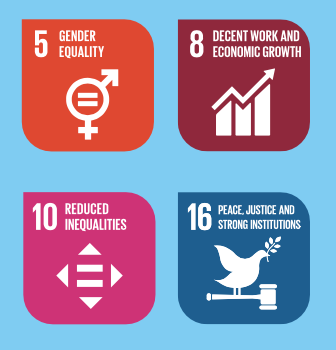
SDGs
Human Capital
Danaos has been officially recognized as one of the Best Workplaces Hellas for 2025 by Great Place to Work® Hellas, marking a significant milestone in our ongoing commitment to cultivating a positive and inclusive work environment. This esteemed recognition is based on comprehensive employee feedback and organizational culture assessments, underscoring the trust, collaboration, and shared purpose that define our workplace. In December 2025, Danaos was certified as a Great Place to Work® for the third consecutive year, achieving an overall employee trust score of 87%. We are proud that our efforts to prioritize employee well-being and foster a supportive culture have been acknowledged, reflecting our dedication to making Danaos not just a company, but a community where our people thrive.
Our human capital is composed of both shore-based office employees and seafarers, whose combined expertise underpins the safe and efficient operation of the Company. Our shore-based teams bring together diverse backgrounds and specialized knowledge across the maritime industry, including marine engineering, maritime operations, finance, human resources, information technology and computer engineering, legal, and commercial functions. Complementing this, our seafarers are highly skilled and thoroughly trained to meet the highest standards of safety, regulatory compliance, and operational efficiency, ensuring reliable performance across all vessels and operations. 100% of employees and seafarers are covered through collective bargaining agreements.
Office Employees Key Statistics
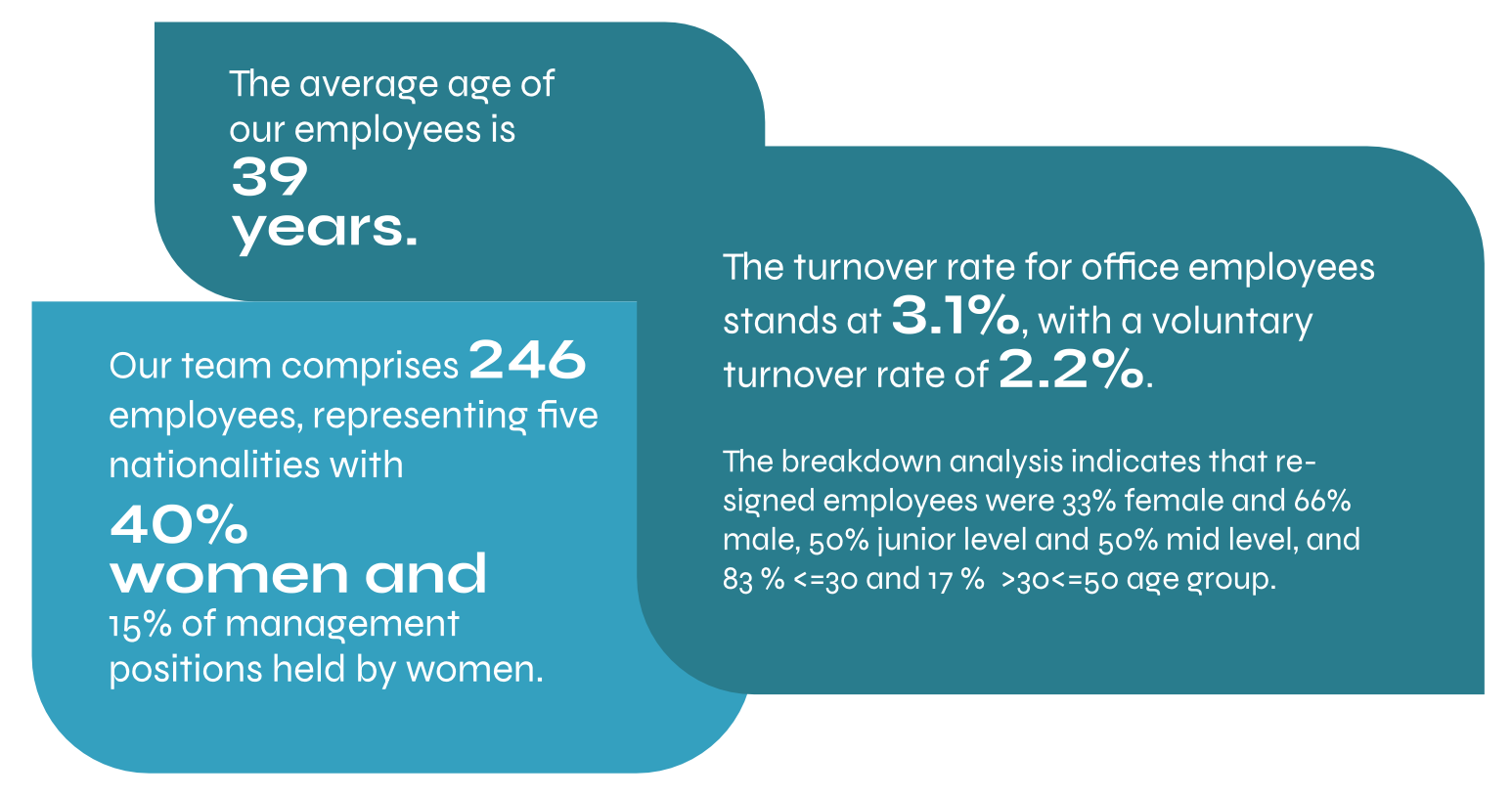
As of 31/12/2025 data, our workforce continued to grow and diversify, reflecting our commitment to excellence and inclusion.
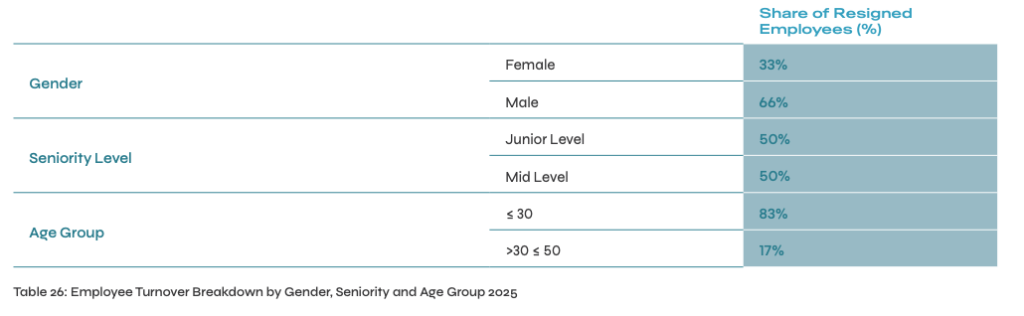
Employee Turnover Breakdown 2025
Share of Resigned Employees
Seafarers Workforce Overview
- Our seafarer workforce remained strong, diverse and committed to excellence.
- A total of 1,898 seafarers were onboard our vessels as of 31/12/2025.
- The average age of our seafarers was 36 years.
- Our workforce represented seven different nationalities, fostering a diverse and inclusive working environment.
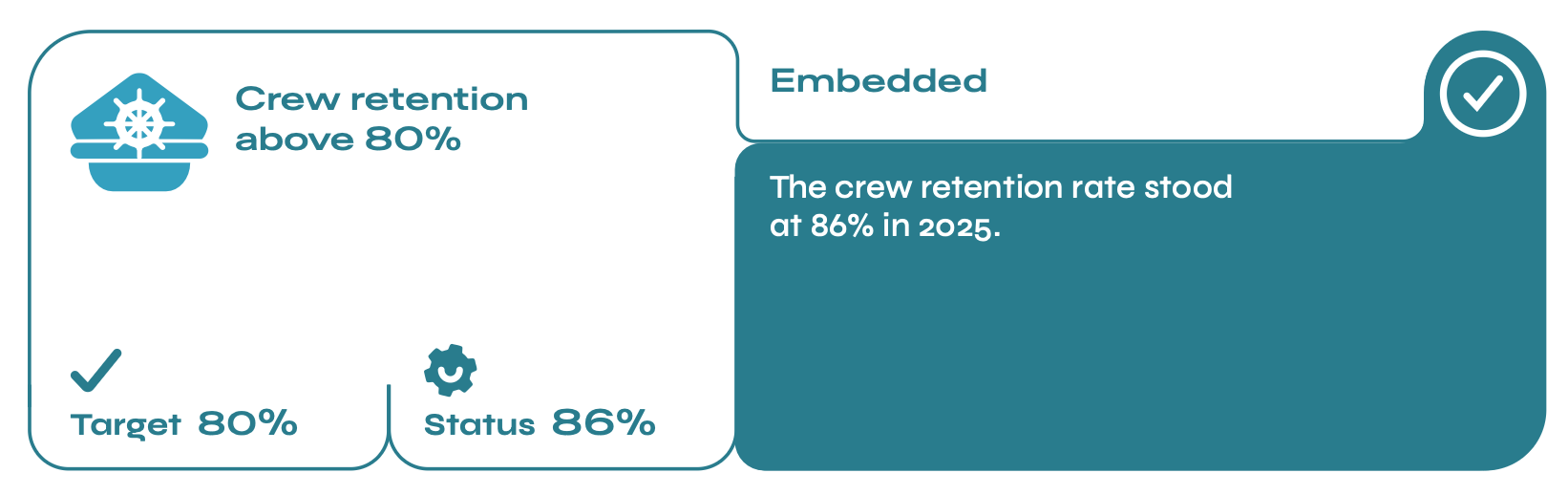
- The crew retention rate stood at 86%.
- We delivered 76,408 training hours.
- A total of 335 seafarers were promoted.
Talent Acquisition
Our Talent Acquisition approach is designed to attract, assess, and retain top talent through a comprehensive and modern recruitment strategy. We actively promote exciting career opportunities across multiple channels, emphasizing the meaningful impact employees can make within our dynamic organization. Competitive compensation packages, extensive benefits, and a strong focus on professional development make Danaos an attractive destination for exceptional individuals.
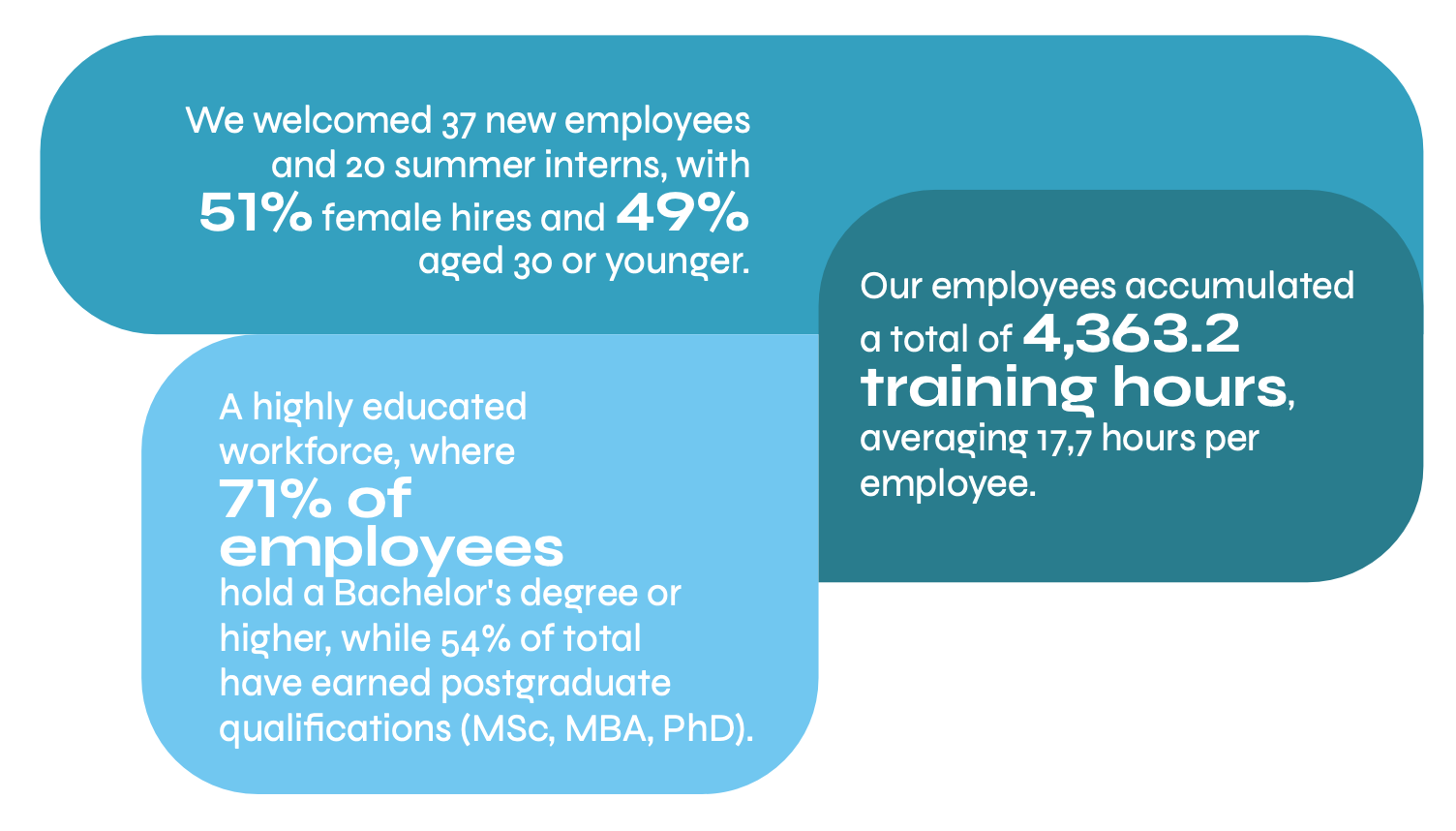
We utilize modern recruitment practices; we leverage cutting-edge technology and innovative platforms to identify candidates whose skills and values align with our goals and culture. Our selection process goes beyond traditional measures: especially for Seafarers, we conduct Crew Evaluation System tests for Officers, while office-based candidates participate in both technical and soft-skills interviews, supported by online assessments that evaluate knowledge, skills, and cultural fit. This holistic approach ensures we build capable, well-aligned teams across all areas of the organization. In 2025 we welcomed 37 new office employees.
Career Path Allocation – New Office Employees
Table 27: Career Path Allocation
| New office employees | 2024 | 2025 |
|---|---|---|
| Age Group | ||
| <=30 | 46% | 49% |
| >30<=50 | 54% | 51% |
| Career Path Level | ||
| Director | 3% | 3% |
| Manager | 5% | 3% |
| Deputy Manager | 5% | 3% |
| Experienced | 25% | 30% |
| Mid Experience | 23% | 19% |
| Junior Employee | 40% | 43% |
| Gender | ||
| Male | 56% | 49% |
| Female | 44% | 51% |
Occupational Health & Safety
We have developed and implemented a documented Safety Management System (the DSMS), through which our Company’s Occupational Health and Safety (OHS) policy is fully reflected and applied. The DSMS fulfils the requirements of the ISM Code and, since 2002—when the Code became mandatory for containerships—it has been successfully audited on a continuous basis, enabling Danaos to maintain its Document of Compliance (the “license to operate” of shipping) valid throughout the years. In addition, our DSMS has voluntarily incorporated the requirements of internationally recognized management system standards, including ISO 9001, ISO 14001, ISO 45001 and ISO 50001.
The health and safety of our employees are intrinsically linked to their well-being, and we focus on achieving the safest possible working conditions through the implementation of an integrated Occupational Health and Safety regime embedded within the DSMS. The DSMS is applicable to all employees aboard and ashore, as well as to all contractors and individuals operating under the Company’s supervision. Workers and/or their representatives are consulted and actively participate in the review and continuous improvement of DSMS policies and procedures.
This regime includes:
- The application of best practices in ship operation and the working environment in order to prevent injuries and ill health.
- Continual, flexible and regularly reviewed risk assessments for vessels, cargo and the environment, including procedures for prioritization and the establishment of action plans.
- The ongoing development of the health and safety competencies of our people, supported by established quantitative targets for the improvement of OHS performance metrics.
The overarching goal of our safety policy remains simple yet vital: to ensure that every day starts and ends with our people safe and healthy. Accordingly, the DSMS is subject to periodic review and amendment in order to:
- Consolidate, well in advance, all applicable local, national and international regulatory requirements affecting our fleet, and
- Incorporate voluntary standards and continuous improvement practices that exceed mandatory rules and regulations.
Our executive management formally endorses the DSMS policies and procedures and actively participates in their periodic review, reaffirming the Company’s commitment to effective leadership, accountability, and continual improvement in occupational health and safety performance.
Risk Assessment
| Risk Assessment Library | 2024 | 2025 |
|---|---|---|
| Total No. of Risk Assessments | 335 | 363 |
| No. of Risk Assessments Revised | 7 | 8 |
| No. of New Risk Assessments | 32 | 28 |
Table 28: Risk Assessment data (2024-2025)
Danaos maintains a structured approach to risk identification and assessment, reflecting the complexity of its global operations in the container ship and bulk carrier sectors. Risk identification is embedded within the Company’s Safety Management System (DSMS), which is certified under the ISM Code and aligned with internationally recognized standards, including ISO 9001 (Quality), ISO 14001 (Environment), ISO 45001 (Occupational Health and Safety), and ISO 50001 (Energy Management).
This framework supports the systematic identification of operational, environmental, and occupational health and safety hazards, including those with potential impacts on crew well-being and safe vessel operations.
Risks are categorized into operational, occupational health and safety, environmental, energy, regulatory, and business continuity areas, enabling a comprehensive and consistent assessment across all activities.
Operational risks include navigational hazards, machinery failures, cargo-related incidents, port operations, and cybersecurity threats, which may affect vessel safety, service reliability, and asset integrity. Occupational health and safety risks arise from onboard and shore-based activities and include exposure to physical, chemical, ergonomic, and psychosocial hazards. Particular focus is placed on fatigue management, mental health and well-being, and the prevention of impairment at work through structured alcohol and drug control programs.
Environmental risks are associated with vessel operations and include marine pollution, air emissions, waste management, and compliance with evolving environmental regulations. Energy-related risks address fuel efficiency, energy consumption, and exposure to fuel price volatility, as well as the transition to lower-carbon operations. Regulatory risks reflect the international maritime framework governing safety, labor, environmental protection, and energy efficiency, while business continuity risks include geopolitical developments, extreme weather events, public health events, supply chain disruptions, and market volatility.
Risk identification and assessment are performed through formal risk assessments, management reviews, routine inspections and control activities within the Safety Management System, external audits, incident investigations, fatigue risk assessments, health and well-being monitoring, and stakeholder feedback.
Crew members are actively encouraged to report hazards, unsafe conditions, and near-miss incidents through established reporting channels, supporting early identification and mitigation of risks.
Workers participate in safety processes through reporting, feedback mechanisms, and involvement in incident investigations and safety reviews, strengthening risk awareness and prevention.
The outcomes support the prioritization of risks, the definition of control measures, and the development of targeted action plans, ensuring safe, efficient, and sustainable fleet operations.
Incident investigation processes are applied systematically to identify root causes and implement corrective and preventive actions.
Risk Assessment Categories (2025)
| Risk Assessment: Main groups | # of Risk Assessments in Group |
|---|---|
| Cargo operations | 9 |
| Hot works | 1 |
| Ship-to-ship operations | 1 |
| Danaos Office | 2 |
| IMO 2020 Sulphur Cap | 5 |
| Anchoring | 4 |
| Arrivals/Departures at/from port | 1 |
| Bunkering | 3 |
| Cyber Security | 1 |
| Defective systems/equipment | 120 |
| Emergency Preparedness | 13 |
| Environmentally Sensitive Operations | 12 |
| Health-Hygiene | 16 |
| Maintenance and Repairs | 18 |
| Management of Change | 3 |
| Mooring | 7 |
| Navigation | 21 |
| Safety Preparedness | 19 |
| Security Preparedness | 11 |
| Dry docking | 12 |
| Use of tools | 5 |
| Various shipboard activities | 2 |
Table 29: Risk Assessment Categories (2025)
Fatigue Risk Assessment
Danaos operates a structured Fatigue Risk Management System supported by a dedicated digital platform through which seafarers record work and rest hours. The system automatically identifies non-conformities and rest hour breaches and generates alerts to the office, enabling timely follow-up and corrective actions.
This process supports compliance with applicable international requirements, including the IMO STCW Convention, the ILO Maritime Labour Convention (MLC, 2006), and the ISM Code.
It also enables early identification of fatigue-related hazards and supports continuous monitoring of crew well-being. Through continuous monitoring, transparent reporting, and proactive management, the Company promotes safe working conditions and mitigates fatigue-related operational risks across its fleet.
Watch and Rest Hours Compliance
Compliance with work and rest hour requirements is monitored through internal systems and external inspections, with results presented in the table below.
| Watch & Rest Hours violations recorded by external inspectors | 2024 | 2025 |
|---|---|---|
| MLC Inspectors on behalf of Flag Administration | 0 | 0 |
| Port State Control Officers | 1 | 0 |
| Flag State Inspectors | 0 | 0 |
Table 30: Watch and Rest Hours Violations (2024–2025)
Mental Health
Danaos implements a comprehensive Mental Health Policy that forms an integral part of our commitment to safeguarding the wellbeing of all personnel across our fleet and offices. The Company’s Safety Management System (DSMS) includes mental health risk identification and prevention guidelines, ensuring that onboard leadership and crew members are equipped to identify and respond to early warning signs.
To reinforce awareness and preparedness, all seafarers undergo a mandatory mental health awareness training module through our digital training platform. This training covers the importance of maintaining good mental health, practical techniques for supporting colleagues who may be affected, and specific signs that may indicate stress, fatigue or psychological strain.
In addition, Danaos provides a 24/7 confidential mental health support service for all seafarers, offering immediate access to professional assistance at any time during their duty periods, regardless of location or time zone. Recognizing that mental wellbeing is equally essential ashore, an equivalent support service is extended to all office employees. Through this structured approach—combining policy guidance, dedicated training and continuous professional support—Danaos promotes a safe, resilient and supportive environment for all its people, both at sea and on land.
Drug and Alcohol Screening
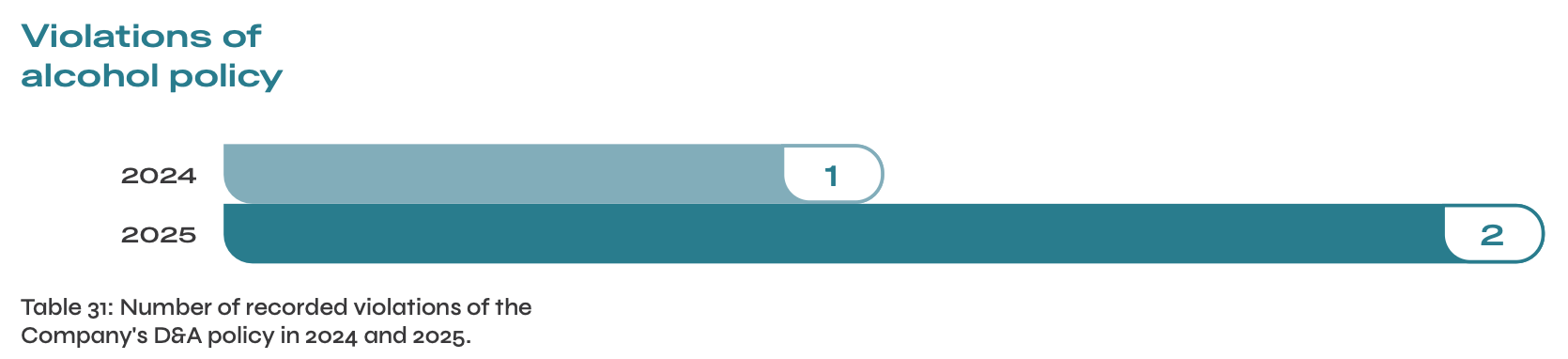
Danaos maintains a strict Drug and Alcohol (D&A) Control Policy to safeguard the safety, wellbeing and operational reliability of all seafarers across the fleet. All crew members undergo mandatory drug and alcohol testing prior to deployment, ensuring full compliance with Company standards and international regulatory requirements.
In addition, all managed vessels are equipped with calibrated alcohol testing devices, enabling unannounced onboard alcohol tests at regular intervals to verify ongoing adherence to our zero tolerance policy. To further enhance the integrity and independence of the program, Danaos has introduced an additional layer of oversight through unannounced D&A testing carried out by accredited private contractors. This multi-tiered approach ensures continuous monitoring, early detection of potential risks, and reinforcement of a strong safety culture across the entire fleet.
Crisis Management
Danaos has implemented comprehensive measures and allocated resources to safeguard people, vessels and operations in the event of an emergency. We have established procedures to identify potential emergency scenarios and developed detailed response plans. These plans are effectively communicated to all employees and crew members, who receive the necessary training to ensure preparedness. Apart from the Response plan, we have developed an in-house Emergency Response Service system to provide clear instructions, task allocations and structured support to effectively manage emergency situations.
A key component of our emergency preparedness system is the hands-on management system onboard every vessel, as outlined in the Ship Security Plan (SSP). All employees, crew members, visitors, inspectors, suppliers and third parties boarding our ships are required to adhere strictly to the SSP guidelines.
Drills
The Company has established a program of drills and exercises to prepare crew and shore-based personnel for emergency actions to develop and maintain confidence and proficiency and test the effectiveness and suitability of the emergency plans.
This planning is drawn up annually in accordance with the requirements provided by international regulations. In addition to the onboard drills required to be performed by the International Convention for the Safety of Life at Sea (SOLAS convention) at specific intervals (monthly, 2-monthly or 3-monthly), the planning includes a variety of scenarios in which crews practice throughout the year. These drills cover both emergency preparedness in respect of safety and familiarity with security plans and procedures. The identification of emergencies is defined in the Emergency Procedures Manual (EPM), which contains guidelines (in the form of checklists) for handling emergency situations and is the point of reference during the design and execution of onboard drills.
Danaos Annual Drills Planning is outlined in the table below:
| Drill Description | Periodicity |
|---|---|
| Abandon Ship | Monthly / Every 15 days (Maltese fleet) |
| Black out | Semi-Annual |
| Collision | Once per year |
| ECDIS Failure | Quarterly |
| Emergency Steering | Quarterly |
| Emergency Towing | Semi-Annual |
| Enclosed Space Entry | 2-Monthly |
| Engine Room Flooding | Semi-Annual |
| Engine Side Emergency Operation | Quarterly |
| Excessive List | Once per year |
| Explosion in Engine Room | Semi-Annual |
| Fire Drill | Monthly / Every 15 days (Maltese fleet) |
| Grounding | Semi-Annual |
| Hazmat | Semi-Annual |
| Helicopter Rescue – Helicopter Crash | Once per year |
| Hull Failure | Once per year |
| Man overboard – Recovery | Quarterly |
| Search and Rescue | Semi-Annual |
| SOPEP | Quarterly |
| Security | Quarterly |
| Stowaway | Once per year |
| SHIP-TO-SHORE with selected ships from our fleet | Once per year |
Table 32: Danaos Annual Drills Planning
All drills are thoroughly documented, capturing key details such as the specific scenario, date, time, location, participants, areas for improvement and an evaluation of the crew’s skills and knowledge. This information is recorded in the Danaos Enterprise ISM Module. The drill reports are then submitted to the office, where they are reviewed by the Safety, Quality and Environmental (SQE) Superintendents to ensure compliance and identify opportunities for further enhancement. In 2025, a total of 5,025 drills were conducted across the Danaos fleet.
Incidents
Our policy mandates that all incidents are reported, investigated and analyzed to prevent recurrence. Crew members are trained and actively encouraged to recognize and report near-misses, which are treated as early warning signs of procedures or practices that require revision and improvement. Investigations are led by the ship’s Master, with support from the Safety Officer, seafarers’ safety representative, or other members of the Safety, Environmental & MLC Committee.
In 2025, we continued utilizing the UDE (Undesired Event) application within our platform for accident and incident analysis reporting. Enhancements to this system provided clearer insights into the conditions surrounding incidents and facilitated close monitoring of corrective actions taken onboard. At the same time, we reinforced best practices to increase crew awareness and promote safety.
Safety Audits
Danaos’ Safety Management Systems are regularly audited by the Safety, Quality and Environmental Department internally and by Recognized Organizations, including IACS members, externally. Unscheduled audits are conducted if serious deficiencies are identified during third-party inspections. Audit findings, non-conformities, or observations are analyzed during the management review process. To ensure excellence, we have established internal Key Performance Indicators (KPIs) aligned with BIMCO SHIPPING KPIs. Serious findings that pose risks to personnel, ships or the environment are analyzed using the Root Cause Analysis (RCA) method, followed by immediate corrective actions.
A variety of inspections are conducted across our fleet to ensure compliance with ISM/ISPS Codes, ISO 9001, ISO 14001, ISO 50001, ISO 45001 standards and the MLC Convention. All vessel certifications were successfully endorsed. The table below outlines the number and types of audits conducted over the past two years.
| Audit type | 2024 | 2025 | Difference 2024-2025 |
|---|---|---|---|
| Internal Audits | 105 | 116 | +10.5% |
| Third party audits | 36 | 32 | -11.1% |
| MLC inspections | 22 | 16 | -27.3% |
Table 33: Number of audits per type of audit for 2024 and 2025
In 2025, the container fleet recorded a total of 531 deficiencies, with 9 detentions. For the bulk carrier fleet, the total recorded deficiencies were 79, with 2 detentions. Finally, we should mention that third-party MLC inspections confirmed that all seafarers onboard are provided with decent living and working conditions and that their employment agreements and wage payments comply with applicable collective bargaining agreements.

MLC inspections confirmed that all seafarers onboard are provided with decent living and working conditions and that their employment agreements and wage payments comply with applicable collective bargaining agreements.
Safety Performance Metrics
| All Fleet | 2024 | 2025 |
|---|---|---|
| LTIs | 48 | 40 |
| LTIF Rate | 3.03 | 2.39 |
| Near Misses reports | 419 | 456 |
Table 34: Safety Performance Metrics for 2024-2025
PSC Boardings – Containers Fleet
| PSC Boardings – Containers Fleet | 2024 | 2025 |
|---|---|---|
| Inspections/Vessels | 2.85 | 3.79 |
| Deficiencies/Inspections | 1.69 | 1.95 |
| Inspections without Deficiency | 52% | 47% |
| ISM Related | 12.3% | 15.8% |
Table 35: Inspections Performance Metrics for containers fleet, 2024-2025
PSC Boardings – Bulk Carriers Fleet
| PSC Boardings – Bulk Carriers Fleet | 2024 | 2025 |
|---|---|---|
| Inspections/Vessels | 2.56 | 2.60 |
| Deficiencies/Inspections | 6.17 | 3.04 |
| Inspections without Deficiency | 22% | 12% |
| ISM Related | 56.3% | 25.3% |
Table 36: Inspections Performance Metrics for bulk carriers fleet, 2024-2025
LTIFR13 Contractors
| Year | Median LTIFR14 | Range | No. of shipyards | YoY trend |
|---|---|---|---|---|
| 2024 | 0.75 | 0.16 – 1.82 | 6 | +35% VS 2023 |
| 2025 | 0.49 | 0.00 – 7.11 | 10 | -34% VS 2024 |
Table 37: LTIFR Contractors 2024-2025
13 LTIFR = (No. of lost-time injuries / annual actual work hours) × 1,000,000. 14 Median LTIFR per year based on participating shipyards. Shipyard names withheld for confidentiality.
In 2025, the median LTIFR for contractors was calculated as the average of the 5th and 6th values in the sorted dataset. One shipyard reported an LTIFR of 0 (indicating zero lost-time injuries), while another reported an LTIFR of 7.11; the latter was excluded from the median calculation as it fell outside the interquartile range. It should also be noted that not all shipyards reported data consistently across all years.Health and Safety at our Offices
At our offices, we have established a Building Emergency Response Team (BERT) with designated members on each floor. This team is certified in firefighting and emergency response, ensuring preparedness for a range of scenarios. To maintain readiness, we conduct annual drills and refresher training sessions. Both the team and the building are equipped with the necessary tools to handle emergencies safely and efficiently.
Additionally, we have a well-trained First Aid Team equipped to provide immediate medical assistance when needed. This team undergoes annual refresher training and is supported with adequate first-aid equipment to ensure swift and effective responses to health-related situations. These initiatives demonstrate our commitment to maintaining a safe and secure environment for all.
According to 2025 Great Place to Work® Trust Index© Survey, 98% of Office Employees believe that Danaos is a safe place to work.
Wellness, Engagement & Retention
Our Wellness, Engagement, and Retention strategy is designed to foster a supportive, inclusive, and high-trust working environment for both office employees and seafarers, with a strong emphasis on wellbeing, engagement, regulatory compliance, and long-term workforce retention. Through structured feedback mechanisms, targeted wellbeing initiatives, and continuous investment in working and living conditions, we aim to maintain low turnover rates and a motivated, resilient workforce.
For office employees, engagement is systematically measured through the annual Great Place to Work Trust Index Survey, which evaluates key dimensions including credibility, respect, fairness, pride, camaraderie, communication, collaboration, leadership, integrity, and care. Survey findings are complemented by regular one-to-one engagement meetings with the HR Director and the Culture & Engagement Manager. To ensure consistency in feedback across the organization, vessel crew survey questionnaires are also conducted.
The results of 2025 survey were the below:

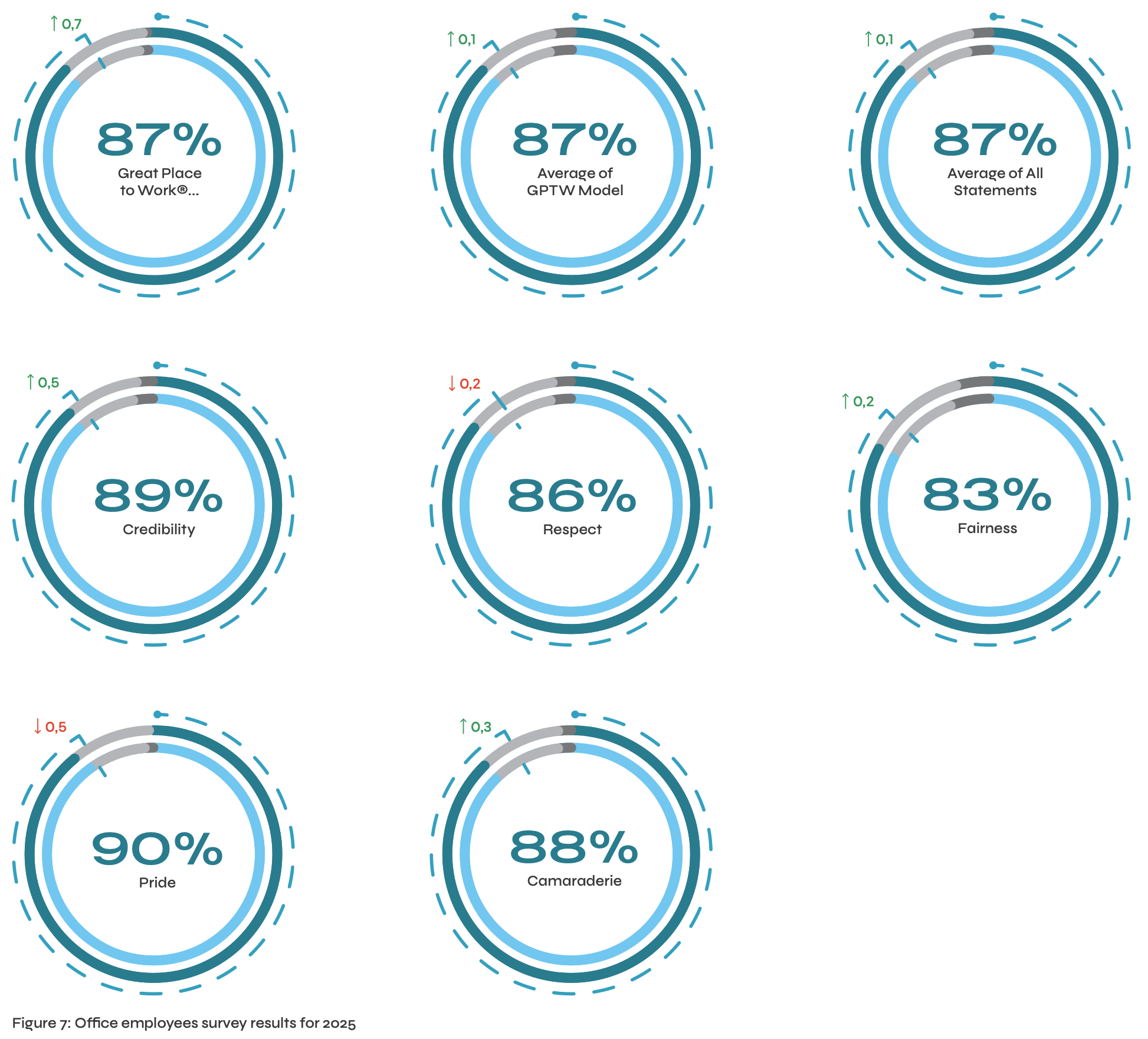
Office employee wellbeing is supported through a comprehensive range of initiatives, including access to medical doctors, diet and nutrition sessions, employee assistance and mental health programs, participation in sports teams, gym contributions, and comprehensive medical health insurance coverage. Recognizing the importance of family support and work-life balance, the Company offers childcare contributions, career orientation sessions for employees’ children, academic achievement awards, and family-inclusive entertainment events. These initiatives are complemented by paid time off and a range of leave options, including parental leave, to support employees in balancing professional and personal responsibilities. Caring score of Trust Index Survey is 88%.
Parental Leave
Danaos Shipping recognizes that supporting employees during significant life events is essential to fostering a fair, inclusive, and resilient workplace. In line with our commitment to responsible employment practices and workforce wellbeing, we provide parental leave arrangements designed to support employees in balancing family responsibilities with their professional roles.
Our parental leave policies apply to eligible office employees and are aligned with applicable national legislation and collective agreements, while also reflecting our broader human capital strategy focused on talent retention, gender equality, and long-term employee engagement. Danaos aims to ensure that employees are able to take parental leave without adverse impact on career development, remuneration, or employment continuity.
| Parental leave | 2024 | 2025 |
|---|---|---|
| Birth Leave | 4 | 3 |
| Father Leave | 3 | 3 |
| Completed leave and remained in the company | 5 – 100% | 3 – 100% |
Table 38: Parental leave (2024-2025)
Seafarers Engagement
For seafarers, structured feedback is gathered through crew survey questionnaires conducted twice per year, supporting continuous improvement and engagement. On top of that we conduct on regular basis Crew Engagement Workshops with the participation of Vessels Top Officers and Crew and HR Management.
Holistic wellbeing is promoted through high-quality training facilities, crew accommodation inspections supported by online applications, high-speed onboard internet, and dedicated crew welfare budgets. As part of our commitment to crew welfare and regulatory compliance, a series of key initiatives introduced in 2024 remain in effect. These include an online training platform that enhances regulatory awareness by enabling crew members to stay up to date with the compliance framework applicable across all managed vessels, with training progress tracked electronically. In addition, watch and rest hours and overtime work are monitored through dedicated online systems, supported by a clear policy governing overtime assignment, tracking, and compensation.
Together, these initiatives reinforce engagement, promote wellbeing, and foster long-term commitment across our workforce.
Diversity, Equal Opportunities and Non-discrimination
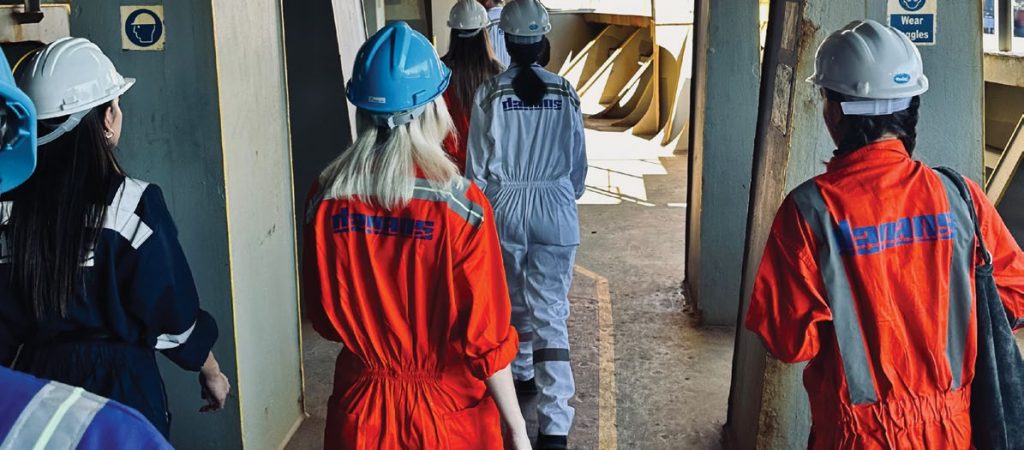
Danaos remains steadfast in its commitment to fostering a workplace culture founded on safety, respect, and inclusivity for all employees and stakeholders. Central to this commitment is the Company’s zero-tolerance approach to violence and harassment in any form. We strive to create and sustain a diverse, inclusive, and equitable working environment where every individual is valued and treated with respect. Diversity and inclusion are integral to our success, and we actively promote a culture of respect, belonging, and equal opportunity for all, irrespective of age, gender, race, ethnicity, disability, marital or family status, religion or beliefs, pregnancy, gender identity or expression, sexual orientation, nationality, or any other characteristic protected by law.
The Diversity, Equal Opportunities and Inclusion Policy applies across all aspects of employment at Danaos, including recruitment, training, performance evaluation, career development, rewards, workplace conduct, facilities, and termination of employment, while also guiding our engagement with external stakeholders such as clients, agents, and suppliers. We firmly believe that diversity is a key driver of value, enhancing innovation, creativity, and sustainable business performance by bringing together a wide range of perspectives, experiences, and backgrounds. Our workforce reflects this commitment, with office employees representing five nationalities and seafarers drawn from seven nationalities, all of whom are expected to actively uphold the principles of equity, diversity, and inclusion in their daily work.
Every Danaos employee, from onboard crews to onshore management, is required to maintain the highest standards of professional conduct, treating others with dignity and respect and avoiding any behavior that could be perceived as violent, abusive, or harassing. To support this, the Company has established robust policies and procedures to prevent, identify, and address incidents of violence and harassment, which are communicated through structured training programs and clear written guidelines. Awareness initiatives, including in-house sessions on cultural awareness, inclusion, and equal employment opportunities, help employees recognize and challenge implicit biases, encouraging fairer interactions and stronger collaboration across diverse backgrounds. Furthermore, all new employees and senior officers receive dedicated Diversity and Inclusion training during onboarding, complemented by accessible online courses available through the Company’s training platform, ensuring continuous learning and the promotion of a respectful, inclusive environment both onshore and at sea.

Danaos remains steadfast in its commitment to fostering a workplace culture founded on safety, respect, and inclusivity for all employees and stakeholders. Central to this commitment is the Company’s zero-tolerance approach to violence and harassment in any form.
In 2025, no incidents of discrimination, violence, or harassment were reported through our online applications.
In Trust Index Survey all statements regarding the fair treatment regardless gender, race and sexual oriented are scored higher than 90%!
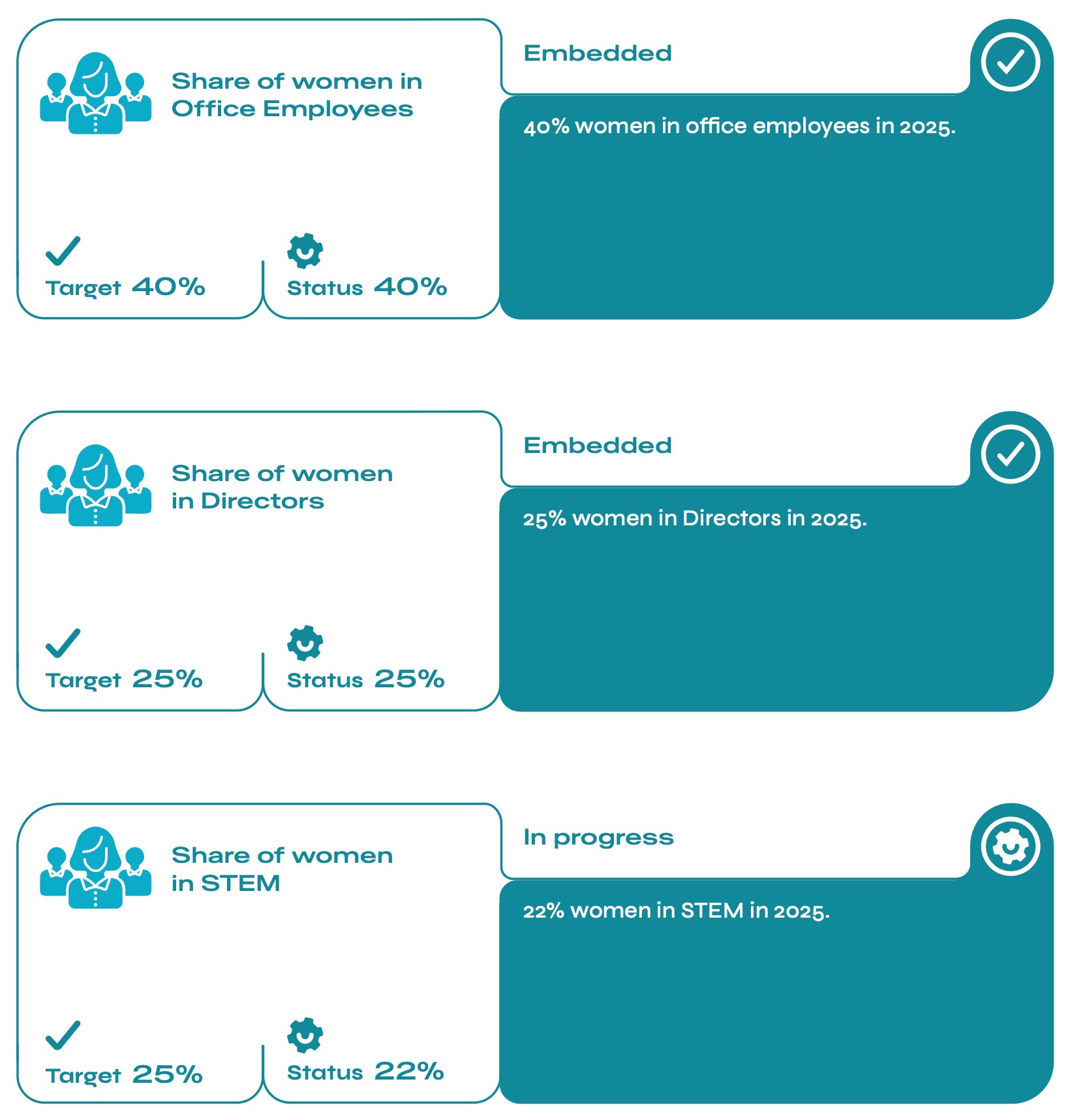
The figures below provide insights into the age diversity of both office employees and seafarers, gender diversity in managerial positions, gender diversity in STEM roles among office employees and the gender pay gap across office positions.
Gender Diversity in Managerial Positions
| Gender diversity | 2024 | 2025 | |
|---|---|---|---|
| Female | Directors | 29% | 25% |
| All Employees | 39% | 40% | |
| Male | Directors | 71% | 75% |
| All Employees | 61% | 60% |
Table 39: Gender diversity in managerial positions for 2024-2025
Age Diversity – Office Employees
| Age | Employees | 2024 | 2025 |
|---|---|---|---|
| ≤30 | Crew | 27% | 26% |
| Office | 26% | 25% | |
| >30–50 | Crew | 59% | 60% |
| Office | 62% | 64% | |
| >50 | Crew | 14% | 14% |
| Office | 12% | 11% |
Table 40: Age diversity office employees in 2024 – 2025
Gender Diversity in STEM
| Gender diversity in STEM | 2024 | 2025 |
|---|---|---|
| Female | 23% | 22% |
| Male | 77% | 78% |
Table 41: Gender diversity in STEM for 2024 – 2025
Female to Male Ratio Salary Gap
| Female to Male Ratio Salary Gap | 2024 | 2025 |
|---|---|---|
| Employees | 101% | 86% |
| Managers | 77% | 88% |
Table 42: Ratio of the basic salary and remuneration of women to men for 2024-2025
Share of Women – Targets & Status
Transparency and Accountability
Danaos aims to be among the most transparent shipping companies globally, supported by initiatives, reports, and tools that collect and communicate data to all interested parties. These efforts are guided by commitments and policies covering sustainable development, compliance with IMO and EU MRV regulations, energy consumption and emissions, employee assessment and development, and engagement across the wider value chain. Accountability is ensured through the Danaos Management System, which strengthens organizational structures and communication channels to improve efficiency and reduce workloads. It includes committee charters, governance guidelines, a Code of Conduct & Ethics for officers and directors, job descriptions, policies, SOPs, and working instructions, helping prevent conflicts of interest and identify potential violations. Employees access it via the intranet, while external stakeholders can view the Code on the Danaos website.
Continuous Learning & Development
Continuous learning and professional development are core to Danaos’ people and ESG strategy, ensuring office employees and seafarers maintain the skills needed to operate safely, efficiently, and responsibly in a changing regulatory environment. For office employees, an annual training plan is built through structured training needs analysis informed by performance reviews, regulatory and compliance requirements, safety standards, new technologies, and wellbeing priorities. Training is delivered via blended learning, combining online microlearning with instructor-led seminars, with strong emphasis on onboarding and company systems. For seafarers, a dedicated Crew Training team provides pre-joining familiarization, supported by a rank-based training matrix, an online training platform, and certified courses delivered through the Danaos Training Center (DATC).
An essential component of the training curriculum is Danaos’ Safety Management System (DSMS), incorporating real-life fleet experiences, feedback and lessons learned. The training program combines theoretical knowledge with practical exercises, using real-world scenarios in simulation-based drills to enhance skills and competence.
The Danaos Assessment and Training Centre (DATC) was established in 2016 to meet the training needs of the company’s fleet officers, crew and shore-based employees. Located at the Danaos Piraeus offices, the facility is equipped with a full-mission Bridge Simulator and state-of-the-art training resources. The DATC underscores the company’s commitment to providing top tier training facilities and further developing the competence of its personnel to ensure operational excellence.
The DATC is certified and accredited by Lloyd’s Register of Shipping and the Cyprus Department of Merchant Shipping (DMS), holding the Approved Training Provider Certificate and ISO 9001:2015 certification. The DATC team works closely with all company departments to identify specific training needs, offering tailored training activities that aim to boost knowledge, awareness, competence and overall performance.
Through the DATC the following Simulation Trainings are provided:
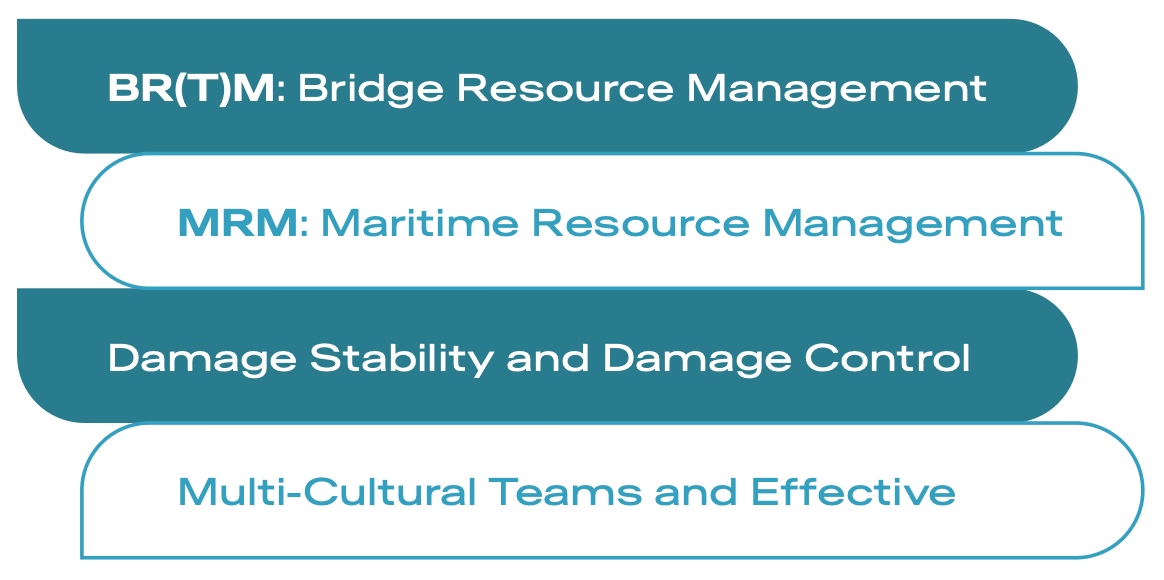
In 2025 DATC offered 318 Training Hours.
Seafarers Training: Navigating the Path to Excellence
By prioritizing technical proficiency, safety, environmental awareness and continuous learning, our training programs enhance the competence and professionalism of seafarers, ensuring the reliability and safety of global shipping operations. To achieve this, we have developed in-house seminars and pre-boarding training, and we continually assess training needs to ensure the safety and competence of our workforce.
Training for both employees and seafarers cover key areas, including:
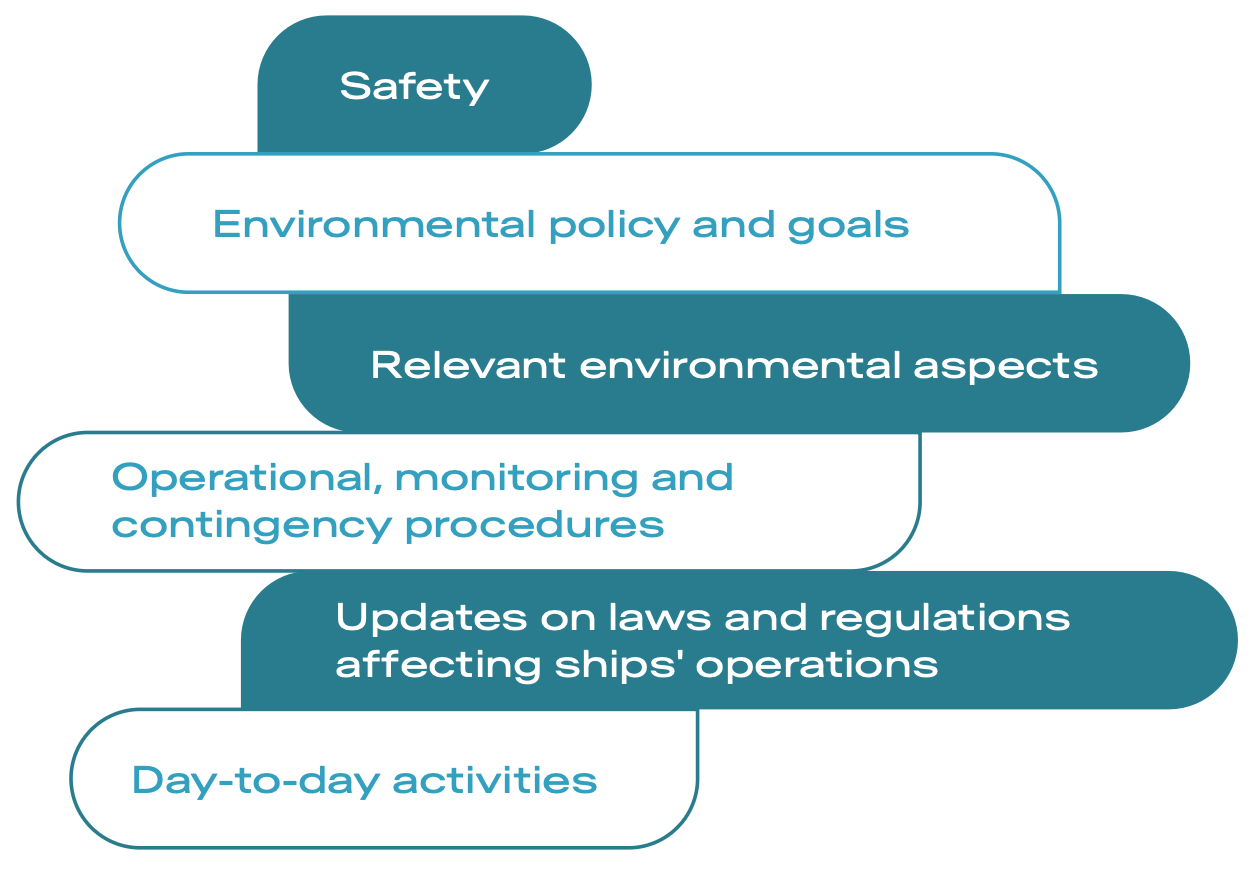
Our computer-based training programs ensure ongoing evaluation and appraisal of seagoing and shore-based employees throughout their careers. A variety of seminars tailored to Danaos Shipping are held at our premises.
In 2025 we offered 76,408 hours of training to seafarers.
Seafarer Development
Danaos adopts a proactive approach to supporting seafarer development and skills enhancement through structured quarterly performance reviews. These evaluations are instrumental in informing career progression decisions and identifying targeted training and development needs. Using an advanced online platform, performance feedback is gathered from a broad range of sources, enabling a comprehensive and objective assessment. Evaluation criteria encompass operational efficiency, regulatory compliance, adherence to safety standards, and the demonstration of key soft skills. By applying rigorous assessment standards, Danaos strengthens a culture of continuous improvement and reaffirms its commitment to excellence and safety in maritime operations.
Cadet Programs
Our cadet programs are designed to support aspiring maritime professionals from various countries, promoting skills development and long-term career growth. We collaborate with local maritime academies with comprehensive approach to maritime education, including rigorous theoretical and practical training aligned with international standards. The programs focus on disciplines such Deck and Engineering Watch Officer training and Electro-Technical, emphasizing safety, technical expertise and strict adherence to industry requirements. Graduates gain essential sea service experience through established placement programs, culminating in certifications that support their career progression. The program also provides ongoing professional development, wellness and tailored training, ensuring a sustainable talent pipeline for Danaos. During 2025, we had 104 participants from various countries.
Onboard Riding Training Program
In 2025, Danaos continued the Onboard Riding Trainer initiative as part of its commitment to strengthening seafarer training and development. The program is based on selecting experienced Deck and Engine Officers from within our crew who bring extensive expertise and a strong understanding of Danaos’ operations. These trainers visit vessels to deliver structured on-the-job training to new seafarers, with emphasis on operational procedures, onboard systems, communication protocols, and corporate culture.
Acting as onboard consultants, the Onboard Riding Trainers share practical knowledge and provide hands-on guidance on both Deck and Engine Room duties. Their purpose is to ensure that new crew members develop a thorough understanding of Danaos’ practices and standards, and fully adopt our safety culture, supporting smooth and consistent integration into daily operations.
Prior to undertaking their assignments, the selected trainers completed extensive training in soft skills and mentoring techniques, enabling them to effectively coach, guide, and support their colleagues. This initiative reflects Danaos’ dedication to building a skilled and confident workforce capable of upholding the Company’s high standards of excellence.
On-Shore Employee Training
We invest extensively in comprehensive training programs designed to facilitate smooth onboarding, enhance digital skills, promote awareness of rules and regulations, encourage safety measures, improve operational efficiency, advance diversity, equity and inclusion (DEI) initiatives and cultivate effective leadership skills. Our commitment to employee growth is reflected in the thousands of training hours provided, delivered through various methods such as instructor-led sessions, webinars, seminars and other interactive platforms. By empowering our team with the necessary knowledge and skills, we not only strengthen our organizational capabilities but also contribute to a more sustainable and responsible maritime sector.
Acknowledging the critical need to stay ahead in the fast-changing maritime industry, Danaos has invested in this initiative to provide its workforce with the essential tools and knowledge. This proactive approach highlights the company’s dedication to innovation and ensures that its team is equipped to tackle the challenges of the digital age, leading to enhanced performance and efficiency throughout the organization.
| Hours of training topics for all employees | 2024 | 2025 |
|---|---|---|
| Business & Operational Knowledge | 1,153.25 | 1,644.2 |
| Familiarisation | 137 | 92 |
| DEI | 24 | 50 |
| Digital Skills | 929 | 924 |
| ESG | 64.5 | 56.5 |
| Leadership | 72 | 144 |
| Rules Regulation Awareness | 173 | 658.8 |
| SMS | 88 | 136.5 |
| Soft Skills | 142 | 167.5 |
| Compliance | 120 | 247.7 |
| H&S | 84 | 242 |
Table 43: Hours of training topics for all employees for 2024-2025
Digital Skills Development Program
In order to respond to the demands of industrial and technology changes and as part of its commitment to digital transformation, Danaos Shipping has launched a comprehensive Digital Skills Development program for its office employees. Understanding the critical role of technology in the evolving maritime industry, the company has invested in equipping its workforce with essential digital competencies. Through this initiative, a total of 924 training hours has been offered, providing employees access to a wide array of courses designed to enhance their digital proficiency including AI tools. This proactive strategy not only reinforces Danaos Shipping’s dedication to innovation but also empowers its team to adapt to the digital landscape, driving efficiency and operational excellence across the organization.
Leadership Improvement Programs
Danaos places strong emphasis on leadership development as a key enabler of safe operations, strong performance, and sustainable growth, investing in targeted programs for both office employees and seafarers. In 2025, the Company invested 72 training hours in leadership workshops for Directors and Managers, focusing on strengthening feedback practices, effective communication, and objective setting to enhance people management and organizational effectiveness. In parallel, an additional 508 training hours were dedicated to leadership development for seafarers, specifically designed for the top four officers onboard vessels.
These programs reinforce the understanding that effective leadership is essential for guiding multinational crews safely and efficiently in demanding operational environments, while supporting a strong safety culture, teamwork, and crew wellbeing. The training equips participants with a solid foundation in core leadership principles, highlights the distinction between managing and leading, and explores how personality, stress, and behavior influence performance. Participants also develop skills in self-leadership, leading others through change, effective verbal and non-verbal communication, diversity management, and the prevention and resolution of workplace issues such as conflict, bullying, and harassment, ultimately contributing to safer operations and improved performance.
- Office employees accumulated a total of training hours 4,363.2, averaging 17.7 hours per employee.
- Seafarers received a total of 76,408 training hours, ensuring ongoing skill development and regulatory compliance.
Feedback and Career Growth
One of the key benefits of our Career Path Framework is its ability to provide employees with a clear pathway for career growth. By outlining the skills and experiences required for progression, individuals can take proactive steps to develop their capabilities and advance within the organization. This not only enhances employee engagement and job satisfaction but also strengthen our talent pipeline, ensuring that we have the right people in the right roles at every level of the organization.
Importantly, our Career Path Framework is an integral component of our broader Human Resources Management strategy, which encompasses Performance Management, Talent Management and Training & Development. By integrating career progression into these core processes, we create a holistic approach to employee development, where individuals are supported at every stage of their career journey.
- In 2025, 42 employees promoted to the next level and 4 employees changed career path.
- 29% of promoted employees were female.
Career Path Allocation
| Career Path Allocation | 2024 | 2025 |
|---|---|---|
| Junior Employee | 17% | 15% |
| Mid Experienced Employee | 24% | 23% |
| Experienced Employee | 37% | 40% |
| Junior Manager | 6% | 5% |
| Deputy Manager | 4% | 3% |
| Manager | 5% | 5% |
| Director | 6% | 7% |
| C-Level | 2% | 2% |
Table 44: Career Path Allocation for 2024-2025
Career Path per Gender
| Career Path Gender Allocation | 2024 | 2025 | ||
|---|---|---|---|---|
| Female | Male | Female | Male | |
| Junior Employee | 57% | 43% | 65% | 35% |
| Mid Experienced Employee | 58% | 42% | 60% | 40% |
| Experienced Employee | 35% | 65% | 36% | 64% |
| Junior Manager | 0% | 100% | 0% | 100% |
| Deputy Manager | 13% | 88% | 13% | 87% |
| Manager | 10% | 90% | 8% | 92% |
| Director | 29% | 71% | 25% | 75% |
Table 45: Career Path per Gender for 2024-2025
Employees Performance Management system
Our Employees Performance Management system is designed to align the “What” — the objectives to be achieved — with the “How” — the competencies demonstrated in achieving them. At the start of each year, Management sets the company-wide objectives and allocates them to departments. Each department then establishes team and individual targets, which are reviewed and evaluated at the end of the year. In addition to objective achievements, each employee is assessed on their competencies and receives constructive feedback on their overall performance.
The performance evaluation process includes several key stages: Self-Evaluation, Manager and Peer Evaluations, Calibration, Talent Review Meetings, and Performance Feedback Discussions. Calibration Meetings ensure consistency and fairness in evaluations across managers, while Talent Review sessions enable Top Management and Directors to discuss both performance and potential, supporting informed career growth and development decisions.
During the Performance Feedback Discussions, employees meet with their managers to review their objective achievements, discuss their performance on key competencies, and define personalized development plans. These discussions also serve as a foundation for setting the objectives for the upcoming year, ensuring clarity, alignment, and continuous professional growth.
In 2025, all employees were successfully evaluated and discussed during the Talent Review meetings, reinforcing the company’s commitment to continuous development and performance excellence.
During 2025, in addition to the established performance evaluation process applied across the organization, managers and directors participated in a comprehensive 360-degree assessment designed to evaluate leadership and managerial capabilities. The process incorporated structured feedback from peers and direct reports, enabling a balanced and transparent review of strengths as well as areas for development. Based on the results, participants received individualized feedback reports accompanied by targeted action plans to support continuous improvement and leadership effectiveness. The Company intends to implement this 360-degree evaluation on a regular basis, reinforcing a culture of accountability, professional growth, and ongoing performance enhancement.
Human Rights
Danaos is committed to upholding and promoting fundamental human rights across all areas of its operations and value chain. Our Human Rights Policy reflects our respect for the dignity, equality, and well-being of all individuals, ensuring fair treatment, safe working conditions, and zero tolerance for discrimination, harassment, forced labor, or child labor. We actively support freedom of association, equal opportunity, and ethical employment practices, while fostering a workplace built on respect, integrity, and inclusion. Danaos proudly aligns with the core conventions of the International Labor Organization (ILO), as well as internationally recognized frameworks such as those of the United Nations and the OECD, integrating these principles into our policies, procedures, and daily operations. Through continuous monitoring, awareness, and responsible business conduct, we strive to positively impact our people, partners, and the communities in which we operate.
Human Rights Risks and Due Diligence
Danaos recognizes that respecting human rights also requires identifying, assessing, and addressing potential risks across our operations and supply chain. We actively monitor areas where human rights risks may arise, including labor practices, health and safety, equality and non-discrimination, and the treatment of seafarers and office employees. Through due diligence processes, internal controls, and engagement with employees, contractors, and partners, we work to prevent, mitigate, and remediate any adverse human rights impacts. Training, audits, and continuous risk assessments support our proactive approach, ensuring alignment with international standards and reinforcing our commitment to responsible and ethical business conduct.
Human Rights Risk Assessment Process
Danaos conducts a structured human rights risk assessment covering its own operations, workforce, and value chain. The assessment identifies key groups potentially at risk, evaluates relevant human rights risks, and considers their potential impact, severity, and likelihood. This process enables the Company to prioritize actions, allocate responsibilities, and monitor effectiveness through defined indicators. The assessment is aligned with international frameworks, including the UN Guiding Principles on Business and Human Rights and relevant maritime and labor standards.
Key groups assessed include office employees, seafarers, women, children, third-party employees (contractors and suppliers), and local communities. For each group, Danaos evaluates risks such as discrimination, forced or compulsory labor, unsafe working conditions, unfair wages, and lack of freedom of association. Preventive and protective measures are implemented through company policies, procedures, training programs, contractual safeguards, grievance and whistleblowing mechanisms, and welfare initiatives. Oversight is shared among relevant departments—including Human Resources, Crewing, Procurement, SQE, and Internal Audit—with coordination through the ESG Working Committee.
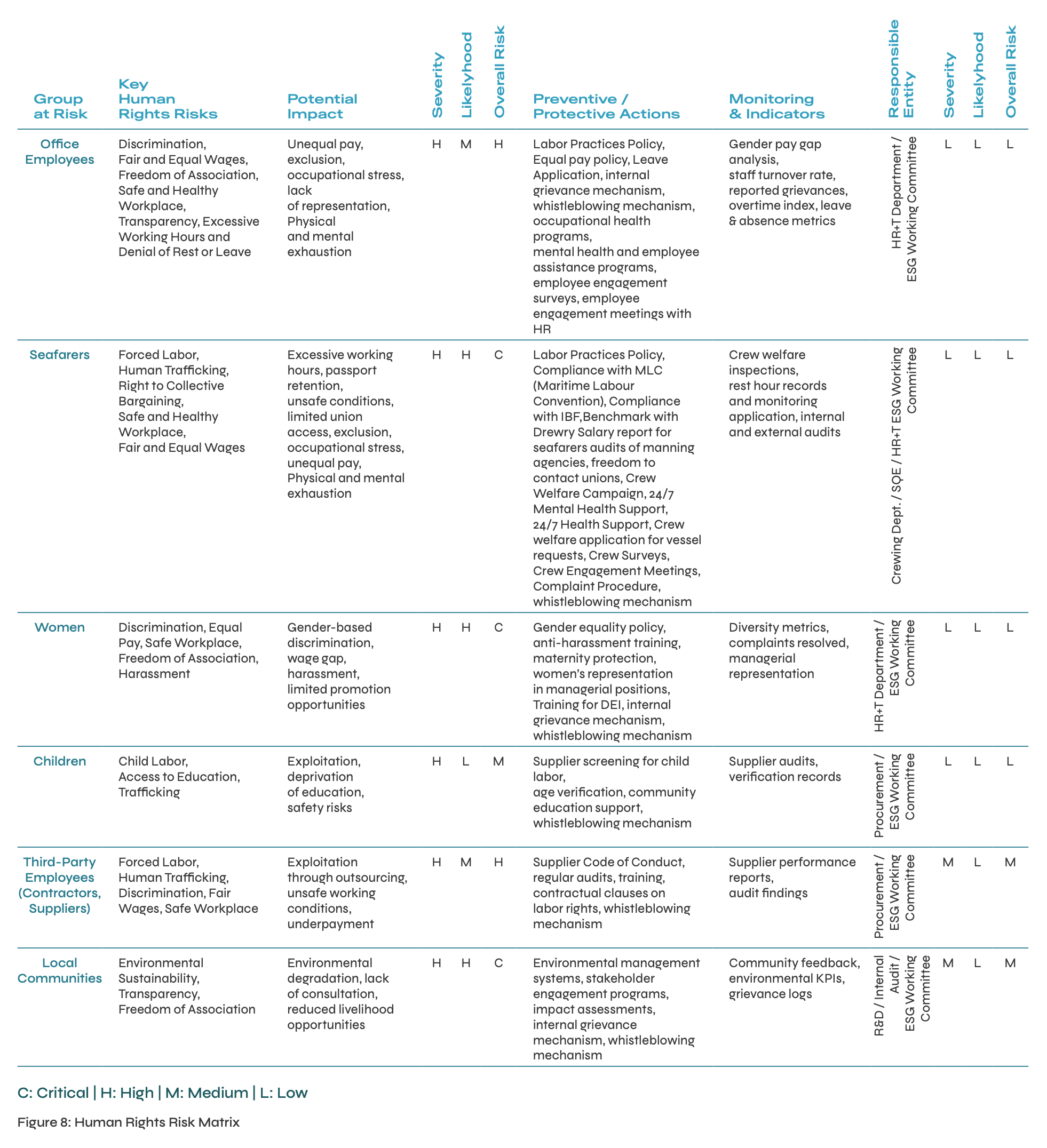
Risk Mitigation, Monitoring, and Outcomes
While certain human rights risks were initially assessed as high or critical—particularly for seafarers, women, and local communities—Danaos has implemented targeted mitigation actions to address these exposures. These include compliance with international labor conventions, supplier due diligence, audits of manning agencies and suppliers, employee and crew welfare programs, diversity and inclusion initiatives, and structured stakeholder engagement. Monitoring is supported by qualitative and quantitative indicators such as grievance reporting, audit findings, turnover and diversity metrics, rest-hour records, and community feedback.
As a result of these measures, residual human rights risks across most stakeholder groups have been reduced to low or medium levels. Continuous monitoring, internal and external audits, and regular reviews ensure that controls remain effective and responsive to evolving risks. Danaos remains committed to ongoing improvement, transparency, and the protection of human rights across its operations and value chain.
Reporting and Grievance Mechanisms
Danaos is committed to transparency and accountability in the management of human rights matters. We provide accessible and confidential reporting channels that allow employees, seafarers, and other stakeholders to raise concerns or report potential violations without fear of retaliation. All reports are reviewed promptly, investigated fairly, and addressed in accordance with our policies and legal obligations. Through regular monitoring, documentation, and reporting, we ensure continuous improvement in our human rights practices and maintain open communication with stakeholders, reinforcing trust and upholding our ESG commitments.
In 2025 we had zero incidents reported through our channels.

Labor Rights
The Company is committed to upholding and protecting the labor rights of all employees, both ashore and at sea, by ensuring fair treatment, equal opportunity, and safe, respectful working conditions. Employment practices are guided by principles of non-discrimination, merit-based decision-making, and equal remuneration for work of equal value, regardless of gender, nationality, or other personal characteristics. The Company ensures competitive and transparent compensation, reasonable working hours, adequate rest periods, and lawful overtime arrangements in compliance with applicable local regulations and international standards, including ILO and Maritime Labor Convention requirements. All employees are entitled to statutory leave and benefits, comprehensive health and wellbeing support, and the freedom to raise concerns without fear of retaliation. Through regular policy reviews, employee engagement, and alignment with global best practices, the Company continuously works to promote dignity, equity, and wellbeing in the workplace.
To achieve the above-mentioned our company has in place systems and programs such as:
- Application for monitoring working and resting hours
- Crew Engagement workshops to collect feedback from seafarers on working conditions
- Employees and Seafarers Engagement and Satisfaction Surveys
- Digital Skills Reskilling programs
- Monitoring application for leave entitlements
- Regular Gender Pay Gap Analysis
- Specific Section on Human Rights Risk Analysis for Labor Rights
Child Labor
We recognize the critical importance of addressing child labor risks within our operations and supply chains. Danaos maintains a strict policy of not employing any seafarer under the age of 18, in any capacity. Age verification is conducted prior to employment to ensure compliance with this standard and to align with international labor conventions and best practices.
Our commitment extends beyond our direct operations and into the global community. We are dedicated to promoting sustainable and responsible business practices that protect the well-being of all individuals involved in our value chain.
We actively engage with our suppliers to communicate our zero-tolerance policy on child labor and align on expectations for ethical and socially responsible conduct. Transparency and accountability are central to our supplier selection process. We require all suppliers to comply with applicable labor laws and industry best practices, including fair employment policies, health and safety measures, and zero tolerance for corruption.
When selecting suppliers, we prioritize ethical and responsible business practices to mitigate risks associated with child labor, especially in industries such as manufacturing and in geographic areas where such risks may be more prevalent. We aim to build a network of suppliers who share our values and commitment to human rights.
Danaos has implemented comprehensive policies that explicitly prohibit all forms of child labor. These policies are communicated throughout the organization and to our suppliers. They are continuously reviewed and updated to remain aligned with international labor standards and evolving expectations.
Through these efforts, we contribute to the effective abolition of child labor while ensuring that the products and services supporting our operations not only meet high performance standards but also reflect our social responsibility.
Security Practices
All deck personnel with designated security responsibilities (52%) receive training on appropriate methods for conducting physical searches of individuals. In accordance with our Ship Security Plan (SSP), any search must be performed with full respect for the individual’s human rights and dignity. In addition to the SSP, the SSO Danaos Security Training Manual—used for onboard training—provides detailed guidance on search procedures and techniques, including specific considerations to ensure professionalism and respect in every situation. No security personnel are supplied by contractors.
Compensation and Pay
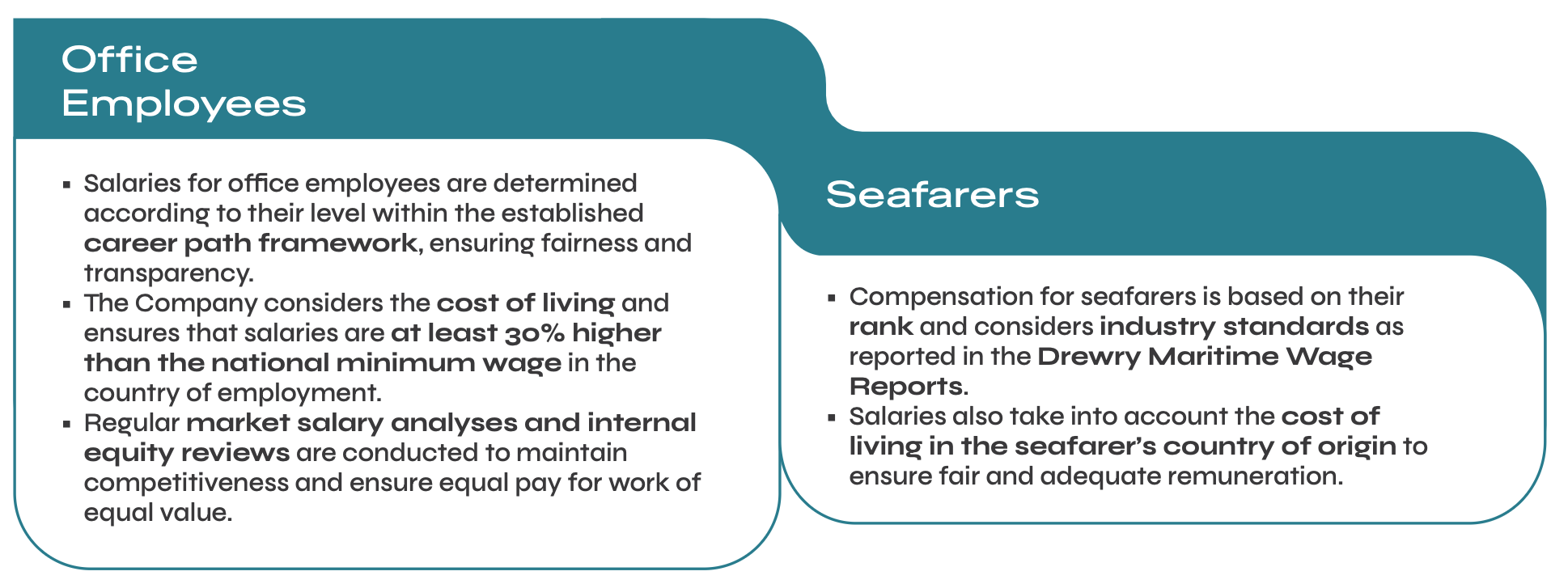
The Company is committed to providing equal pay for all employees based on objective criteria, including role level, performance, skills, experience, and responsibilities. Compensation decisions are made transparently and consistently to ensure equal pay for work of equal value, without regard to gender or any other personal characteristic. To reinforce this commitment, the Company regularly conducts gender pay analyses to identify, monitor, and address any pay disparities. Where gaps are identified, corrective actions are implemented to ensure fair and equitable remuneration practices across the organization.
According to Labor Practices Policy the Compensation Practices are the below:

Contribution to Society
Empowering Communities – Commitment to Health & Inclusivity
We actively support initiatives that promote health, wellbeing, and social inclusion, demonstrating our commitment to making a positive impact within the communities we serve. Danaos proudly takes part in the Greece Race for the Cure organized by the NGO Alma Zois, contributing to efforts that raise awareness and support the fight against breast cancer. In addition, we collaborate with ELEPAP, an organization dedicated to supporting children with disabilities, through our participation in the Athens Classic Marathon. These collective actions reflect our ongoing dedication to causes that foster community wellbeing and inclusivity. Through the Act of Joy initiative, Danaos also provides donations to NGOs focused on the protection and welfare of children.
Beyond community engagement, Danaos promotes employee wellbeing through the establishment of the Danaos Blood Bank. This initiative enables employees to donate blood, offering vital support to colleagues and their families in times of need, while also strengthening and contributing to the national healthcare system.
Fostering Maritime Education
We remain dedicated to supporting the development of future maritime professionals through active engagement with academic institutions and schools. In 2025, we welcomed 394 students from Greek and international universities, along with more than 61 students from local schools, offering them meaningful exposure to the maritime industry. These interactions provided hands-on experiences and practical insights, helping to inspire and inform the next generation while strengthening understanding of the sector within the academic community. Through these initiatives, Danaos continues to invest in education and young talent, contributing to the long-term sustainability and growth of the maritime industry.
In parallel, we actively participate in Maritime Career Events, where we share insights into career pathways, skill requirements, and professional opportunities within the maritime sector, reinforcing our commitment to talent development and career progression. Our involvement in the Adopt a Ship initiative, led by Project Connect, further underscores our focus on education and community engagement. Through this program, we support 19 vessels throughout the academic year, connecting primary and secondary school students with seafarers and providing them with a deeper understanding of maritime professions and real-life industry experiences.
Additionally, we continue to support the Students Onboard educational voyages, part of the Management in Maritime Science and Technology Master’s Program, in collaboration with the University of Piraeus and the Hellenic Naval Academy. This initiative enables postgraduate students to spend up to one week onboard Danaos vessels during port-to-port voyages, gaining firsthand exposure to daily maritime operations. By bridging academic learning with practical experience, the program equips students with valuable insights and skills, preparing them for successful careers in the maritime industry.

We remain dedicated to supporting the development of future maritime professionals through active engagement with academic institutions and schools.
Empowering the Next Generation
The Danaos Scholarships demonstrate our ongoing commitment to empowering talented and motivated individuals pursuing studies in maritime-related disciplines. By providing financial support, Danaos aims to recognize and encourage students who exhibit strong academic performance, leadership potential, and a genuine passion for contributing to the advancement of the maritime industry. The scholarship program underscores our belief in education as a key driver of innovation, excellence, and long-term success within the dynamic global shipping sector. As scholarship recipients progress through their studies, we look forward to their personal development and the meaningful contributions they will bring to the industry. In addition, Danaos awards six scholarships annually to university students, acknowledging their dedication to becoming the next generation of maritime professionals.
The Danaos Scholarships demonstrate our ongoing commitment to empowering talented and motivated individuals pursuing studies in maritime-related disciplines.
Leading the Way in Environmental Responsibility
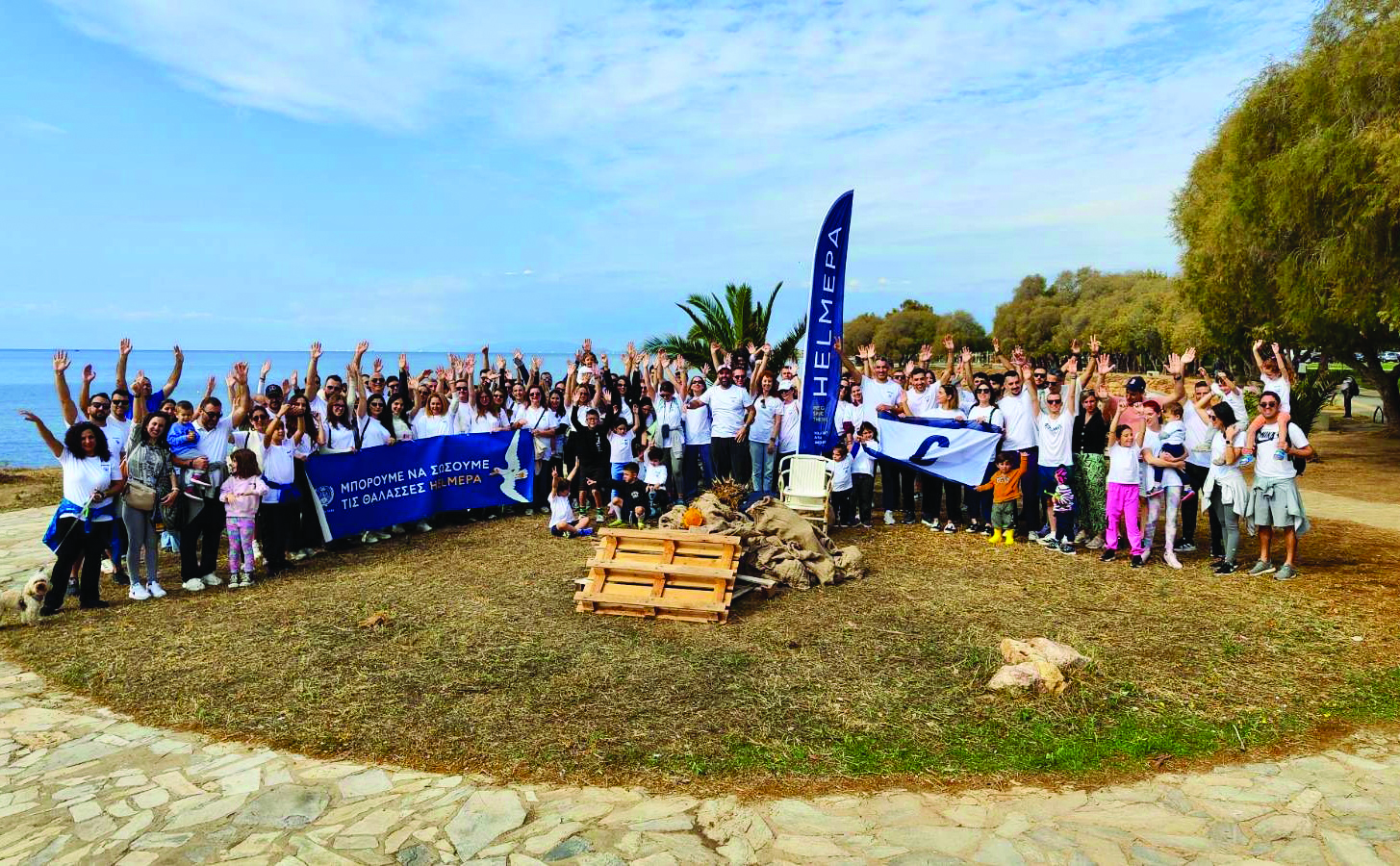
We continue to demonstrate our strong commitment to environmental protection through a range of meaningful initiatives. Our dedication to safeguarding was highlighted by our participation in the International Coastal Cleanup Campaign organized by HELMEPA, during which 88 Danaos employees joined forces to collect marine litter and protect local coastlines. In parallel, more than 19 employees took part in our annual tree planting initiative, carried out in collaboration with the NGO We4All, further supporting environmental restoration efforts.
Beyond these activities, Danaos promotes sustainability through clothing recycling programs. In partnership with Fabric Republic, we enabled the recycling of more than 100 kilograms of clothing in 2025, supporting waste reduction and responsible resource management. Collectively, these actions underscore our proactive approach to environmental stewardship and our ongoing commitment to delivering a positive and lasting impact on the environment.
Supporting Cultural Institutions and Digital Innovation
Danaos is committed to supporting cultural institutions that preserve heritage while embracing digital transformation. Through its long-standing collaboration with the Benaki Museum, the company contributes to the sustainability and technological advancement of one of Greece’s most important cultural organizations.
As part of the Museum’s Position Adoption Program, Danaos supports the role of Head of Systems Sector “Giannis and Dimitra Coustas”, reinforcing the museum’s digital infrastructure and technological resilience. This multi-year commitment reflects the company’s broader philosophy of supporting initiatives that enhance institutional capacity, knowledge preservation, and access to culture.
During 2025, the supported program contributed significantly to strengthening the Benaki Museum’s information systems, cybersecurity protocols, and overall technological infrastructure. Key initiatives included the gradual upgrade of workstations across the organization to improve productivity and user experience, the reinforcement of cybersecurity policies and compliance monitoring procedures, and the optimization of internal digital workflows to increase operational efficiency.
In parallel, major digital projects were advanced, including the upgrade of the Museum Plus Collection Management System and the development of the museum’s new website, which forms part of a broader digital identity strategy aimed at improving accessibility, enhancing institutional readiness for the future, and creating new revenue opportunities.
Danaos renewed its annual support for the program in 2026, continuing a multi-year commitment that contributes to the museum’s long-term sustainability and strategic development.
Beyond technological development, the partnership also strengthens the museum’s cultural outreach. Danaos employees are invited to engage with the museum’s exhibitions and cultural programs, further fostering cultural engagement and awareness within the company’s community.
Through initiatives like this, Danaos aims to support the intersection of culture, technology, and education, contributing to the long-term preservation and accessibility of cultural heritage while promoting digital innovation in cultural institutions.