


Governance
03
Material Topics
- Anti-corruption
- Regulatory compliance
- Shipping management & performance
- Business ethics
- Strategy & Risk management
- Transparency
- Roles & Responsibilities
Goals 2028
Status: 9 out of 15 governance goals
have been already embedded in 2025.
SDGs

How Danaos Is Directed, Overseen, and Held Accountable
Governance at Danaos is a practical system of oversight, accountability, and disciplined decision-making that supports long-term performance in a complex and evolving maritime environment. Rather than operating as a static framework, governance arrangements are designed to remain responsive to regulatory developments, technological change, and emerging risks, while maintaining clarity of roles and responsibilities.
Oversight is exercised through a clearly defined Board and committee structure, supported by formal policies, internal controls, independent assurance, and transparent reporting practices. Together, these elements provide the foundation for responsible conduct, effective risk management, and sustainable value creation.
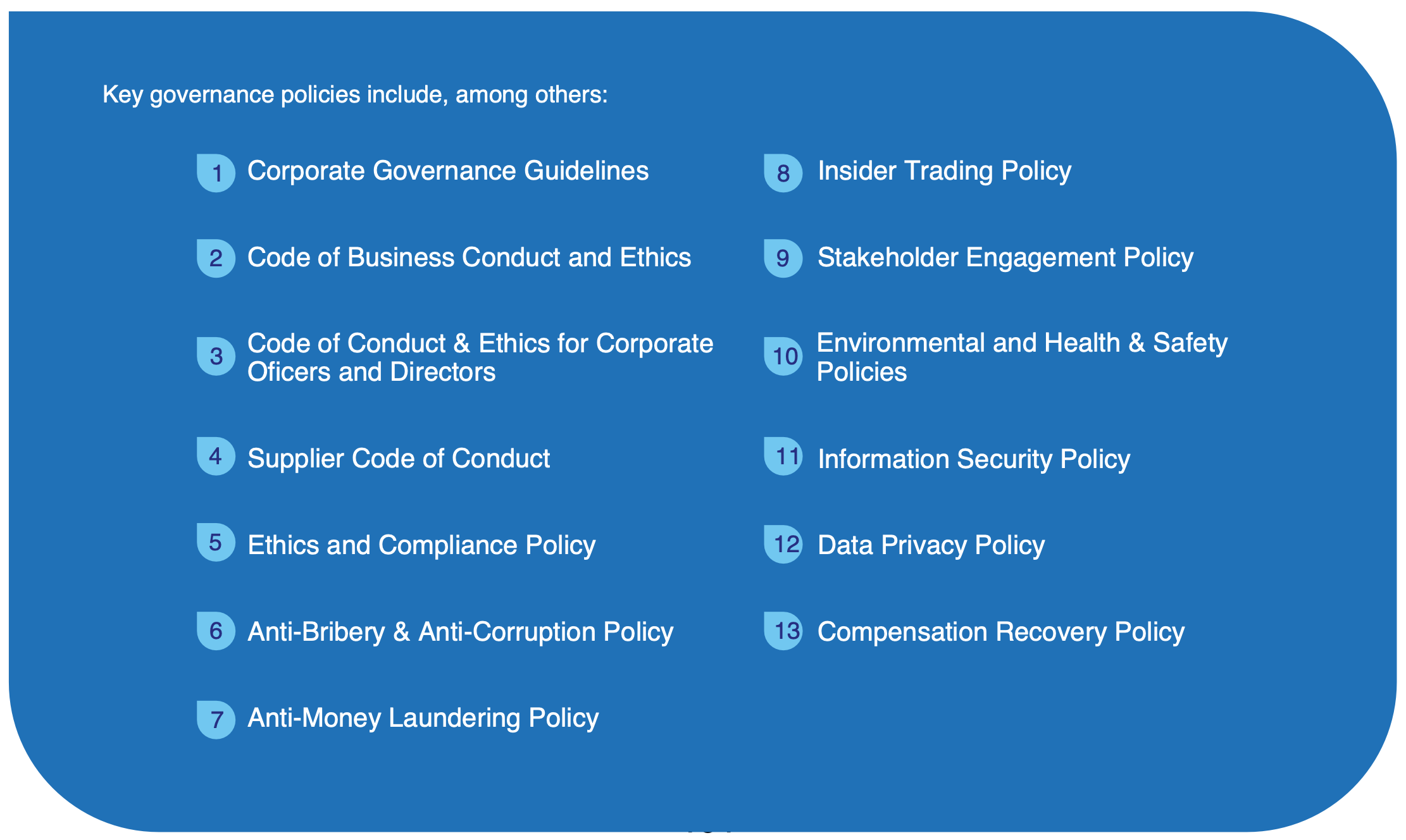
Governance Framework and Policies
Danaos operates under a comprehensive governance framework that defines standards of conduct, decision-making authority, and oversight responsibilities across the organization. This framework is supported by a suite of policies and codes that address ethics, compliance, risk management, information security, data privacy, and stakeholder engagement. These policies are actively communicated and periodically reviewed to ensure continued alignment with applicable laws, regulatory expectations, and the Company’s evolving risk profile. In 2025, no significant instances of non-compliance with laws and regulations were identified. They are reinforced through training, internal monitoring, and oversight mechanisms, establishing a common foundation for ethical conduct, compliance, and accountability across the organization.
Board of Directors and Committee Oversight
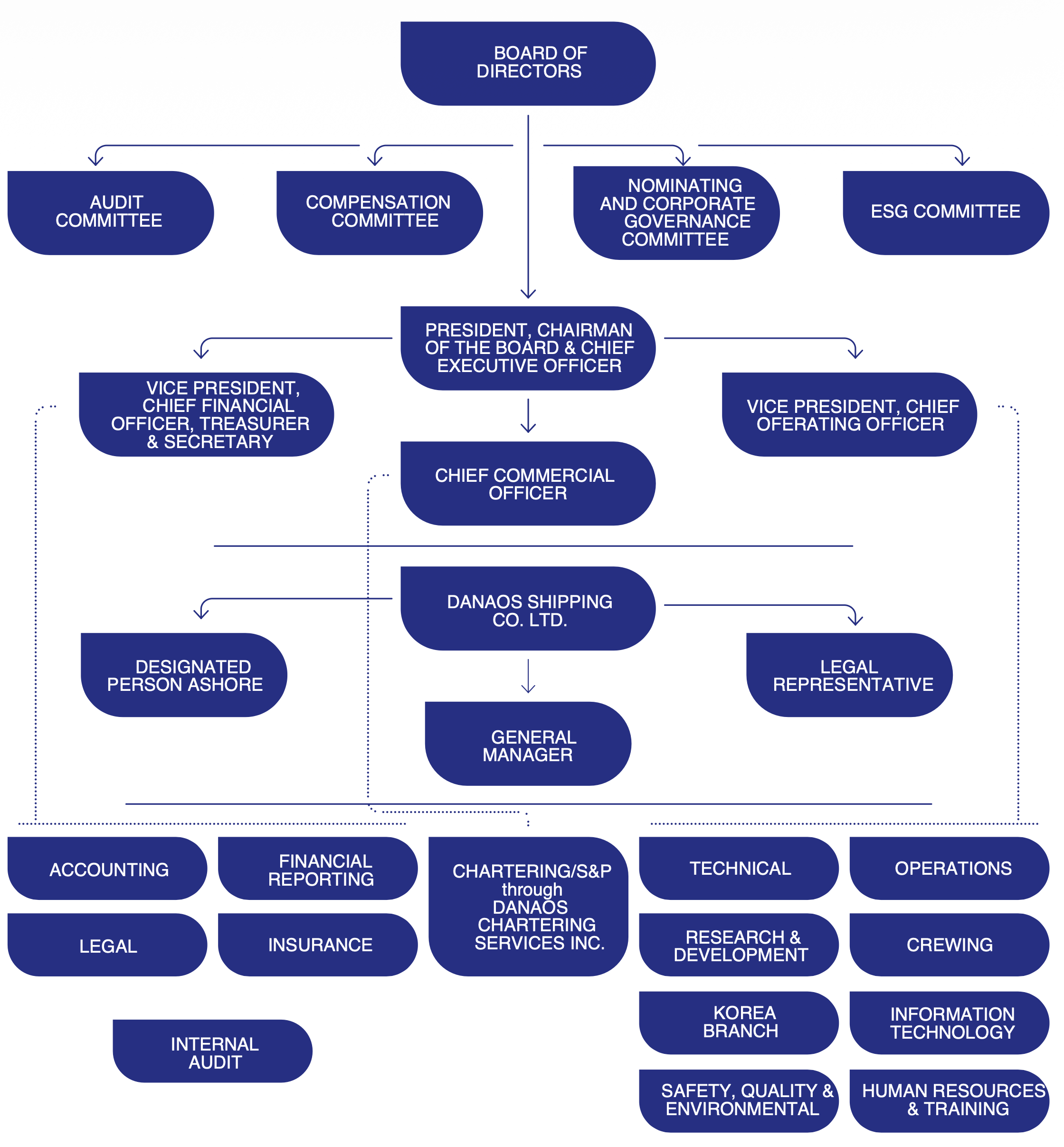
The Board of Directors provides strategic leadership and oversight of Danaos’s performance, governance practices, and long-term direction. In 2025, Board engagement remained strong, with an average meeting attendance rate of 95%, reflecting a high level of commitment to effective oversight. The Board comprises six members of diverse national backgrounds and professional expertise, including shipping, engineering, finance, cybersecurity, technology, sustainability, and legal disciplines. A majority of members serve as independent directors (four out of six), supporting objective judgment and balanced decision-making, while one member serves as executive director and one as non-executive director. The Board’s average tenure of 13.83 years reflects continuity of experience alongside institutional knowledge. This mix of skills, experience, and perspectives supports effective decision-making and long-term performance.
To support focused oversight, the Board has established four specialized committees:
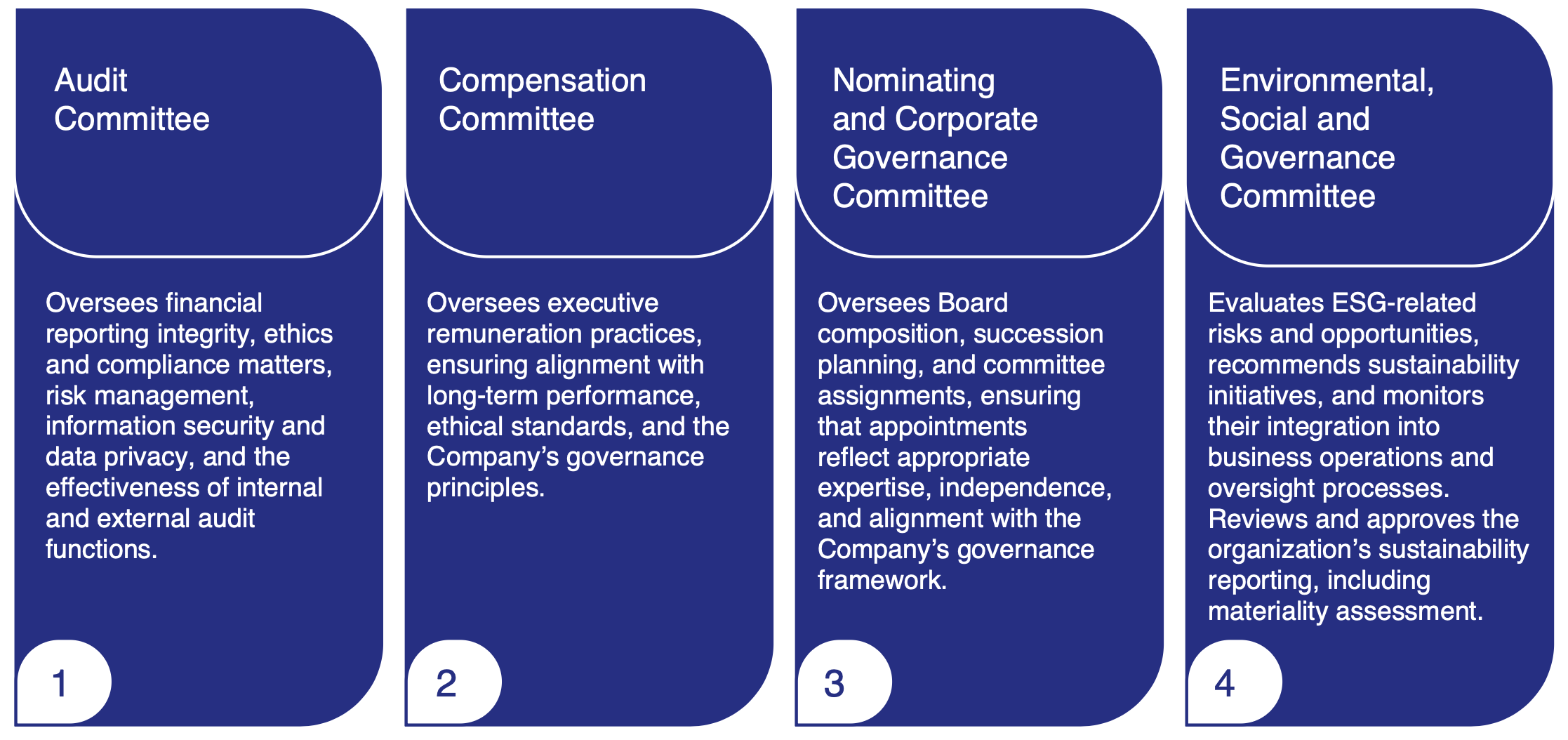
Committee Chairs report regularly to the full Board, ensuring sustained oversight inform Board-level discussion and that significant matters, emerging risks, and areas requiring decision-making.
Board and Committee Performance Evaluation
To support continuous improvement, the Board of Directors and its Committees conduct annual performance assessments through structured self-evaluation questionnaires. These evaluations cover key aspects of Board effectiveness, including Board and committee composition, quality and clarity of information provided, agenda structure, effectiveness of discussions, oversight of risk and compliance matters as part of the evaluation scope, and the adequacy of time dedicated to emerging issues such as cybersecurity, regulatory developments, and sustainability. The results of the self-evaluation process are reviewed by the Board and its Committees, providing directors with a structured basis for reflection on governance practices and oversight effectiveness. This process supports informed discussion and helps ensure that Board and committee practices remain appropriate for the Company’s evolving operating environment.
Board Nomination & Remuneration
Responsibility for identifying, evaluating, and nominating qualified candidates to the Board resides with the Nominating and Governance Committee. Candidates are assessed based on professional performance, academic achievements, independence, diversity of perspective, and relevance to the Company’s strategic direction. The Compensation Committee oversees the Company’s remuneration framework, ensuring that compensation practices remain fair, competitive, and strategically aligned with the Company’s long-term direction. The Committee conducts an annual review and approval of all remuneration policies to confirm that they support a performance-driven culture, uphold our corporate values, and reflect the broader interests of both the Company and its stakeholders. In carrying out its responsibilities, the Committee establishes compensation structures for executive officers, primarily based on the accomplishment of valuable sustainability targets. This approach reinforces responsible decision-making, encourages sustainable value creation, and strengthens alignment between executive performance and the Company’s long-term commitments.
Chairman, Chief Executive Officer, and Independent Oversight
The Chairman of the Board also serves as Chief Executive Officer. To support independent oversight within this structure, the Board has established specific governance safeguards. Independent directors meet in executive sessions without executive management present, and these sessions are chaired by the Presiding Director, who is selected from among the independent directors. The Presiding Director presides over executive sessions and facilitates communication between independent directors, the Chairman, and senior management, as appropriate. Executive directors do not participate in committee meetings. Committee structures are designed to promote objective oversight: the Audit Committee and the Compensation Committee are composed entirely of independent directors, while the Nominating and Corporate Governance Committee and the Environmental, Social and Governance Committee each include one non-executive, non-independent director alongside independent directors, reflecting their broader advisory and strategic remit.
Related-Party Transactions & Anti-Corruption
Related-Party Transactions and Conflict-of-Interest Controls
Related-party transactions and conflicts of interest are governed by a formal policy that requires annual declarations by directors and officers and ongoing disclosure of potential conflicts. Related-party transactions are disclosed in the Company’s annual regulatory filings in accordance with applicable requirements and form part of the Board’s oversight responsibilities. Identified related-party transactions are reviewed by the Legal and Finance functions and, where significant, are submitted to the Board for review and approval. In 2025, no conflicts of interest were reported.
Anti-Corruption and Ethical Business Conduct
Danaos maintains a zero-tolerance approach to bribery and corruption and actively supports industry-wide efforts to promote ethical conduct, including through participation in the Maritime Anti-Corruption Network (MACN).
The Company’s anti-corruption framework is supported by policies, targeted training, and awareness initiatives designed to ensure that employees and business partners understand their responsibilities and reporting obligations. Operations involving jurisdictions assessed as higher risk are subject to enhanced controls.
In 2025, no incidents of corruption, bribery, or breaches of the Company’s anti-corruption policies were recorded. The proportion of port calls in higher-risk jurisdictions, as ranked by the Transparency International’s Corruption Perception Index (CPI), represented 1.02% of total port calls.
The Company ensures that its anti-corruption expectations are communicated through the Code of Conduct, onboarding processes, and periodic internal updates.
In 2025, these efforts were supported by targeted training initiatives delivered through a customized program for both office-based employees and seafarers. Among office-based employees, 229 out of 243 completed global business ethics training and 225 out of 244 completed anti-bribery and anti-corruption training, representing completion rates of 94% and 92%, respectively. Seafarer participation was also tracked during the year. While anti-bribery and anti-corruption training was not part of seafarers’ mandatory training requirements, 34% of total seafarers completed the training; among officers, the completion rate was 42%. Participation was actively monitored across all employee groups, with follow-ups performed where needed.
At Board level, anti-corruption expectations are addressed through the governance framework and regular compliance updates. The Company is evaluating the introduction of more structured training for Board members as part of its ongoing governance enhancements.
The Company also communicates its anti-corruption principles to business partners through contractual provisions, onboarding processes, and due diligence procedures.
Looking ahead, the Company will further enhance its Training Policy in 2026, strengthening requirements, monitoring, and overall participation.
Danaos did not make political contributions or engage in lobbying activities. External affiliations were limited to membership in recognized maritime and industry associations that promote compliance, safety, and sustainability.
These include the Union of Greek Shipowners (UGS), Cyprus Union of Shipowners (CUS), Malta International Shipowners Association (MISA), INTERCARGO, BIMCO, Nautical Chamber of Greece (NEE), American Hellenic Chamber of Commerce, Liberian Shipowners’ Council, Methanol Institute, Global Maritime Forum (GMF) and the Ammonia Energy Association.
Membership fees to these organizations are administrative and non-political. They support technical cooperation, sustainability initiatives, and regulatory compliance. No portion of these payments is directed toward political or legislative advocacy.
All memberships are reviewed annually by the Compliance Officer to ensure continued alignment with Danaos’ Code of Conduct, Anti-Bribery and Anti-Corruption Policy, and overall ESG commitments.
Climate Alignment and Trade Associations
The Company does not engage in political lobbying or policy advocacy and limits its participation in trade and industry associations to technical collaboration, safety, and sustainability within the maritime sector. Trade association memberships are periodically reviewed to ensure alignment with the Company’s environmental objectives and Paris Agreement commitments, with the ESG Working Team (ESGWT) exercising dedicated oversight. The ESGWT evaluates updates and positions issued by relevant associations against the Company’s decarbonization and sustainability strategy, informs the COO any material developments, and jointly determine appropriate actions to maintain alignment. The Company engages selectively with organizations that support sustainable shipping, such as INTERCARGO, BIMCO, Methanol Institute, and Ammonia Energy Association, and promotes constructive dialogue within these bodies to advance Paris-aligned maritime decarbonization.
Whistleblowing and Reporting Mechanisms
Danaos maintains formal reporting channels that allow employees and external stakeholders to raise concerns confidentially and without fear of retaliation. These include publicly available whistleblowing reporting mechanism and an internal grievance process for workplace-related matters. Guidance on the proper use of the available reporting channels is provided across the organization through participation in targeted training programs. Those sessions enable better understanding of the Company’s Ethics and Compliance policy, while they promote a culture of transparency and accountability. The Audit Committee oversees the effectiveness of these mechanisms. Information on the operation of reporting channels, including confirmation of reported cases and overall usage, is periodically provided to the Audit Committee. This reporting supports Audit Committee oversight, including in periods with no reported cases. In 2025, no confirmed breaches of the Code of Conduct or ethics policies, including Anti-Money Laundering and Insider Trading, were identified.
Risk Management and Internal Assurance
Risk management at Danaos follows a structured and forward-looking approach that supports informed decision-making and organizational resilience. Annual enterprise risk assessments incorporate scenario analysis and STEEPLE considerations, covering financial, operational, strategic, regulatory, technological, geopolitical, and sustainability-related risks. Risk management is integrated with strategic planning and oversight discussions at both management and Board level. Risks identified through the assessment process are considered in the context of business planning, regulatory developments, and emerging industry trends, supporting a coherent approach to risk governance aligned with the Company’s long-term objectives. This approach ensures that risk considerations are embedded in operational and strategic decision-making processes across the organization.
Risk governance is supported through a three-line model:
- First Line Operational Ownership: Business units manage risks within their areas of responsibility.
- Second Line – Risk Management and Compliance Oversight: Senior management establishes policies and monitors adherence.
- Third Line Independent Assurance: Internal Audit provides independent evaluations and advisory insight.
Focused training on core risk management principles is provided to all Company personnel, promoting risk awareness across the organization.
Cybersecurity, Data Privacy, and Technology Governance
Cybersecurity and data protection are key governance priorities, reflecting the Company’s reliance on digital systems and data-driven processes. Oversight is provided at Board level, with periodic reporting to the Audit Committee on cybersecurity risks, control effectiveness, and emerging threats. The Chairman of the Board’s valuable experience and strong background in information security supports informed decision-making and effective governance in this critical area. Danaos maintains an information security program aligned with ISO 27001:2022 and continues to enhance data privacy governance through the pursuit of ISO 27701 certification. The Company maintains incident response and information security-related business continuity plans, which are subject to periodic review. Tabletop exercises and crisis-response simulations are planned to further strengthen preparedness and escalation procedures. In 2025, no cybersecurity or data privacy incidents were recorded, while there were no confirmed breaches involving third-party personal or confidential data held by the Company. Technology governance extends beyond risk mitigation. Digitalization, advanced analytics, and artificial intelligence initiatives are overseen to ensure responsible implementation, ethical use, regulatory compliance, and alignment with the Company’s governance standards.
Supplier Governance and Sustainable Procurement
Supplier governance and sustainable procurement form part of Danaos’s broader risk and sustainability framework. As described in the Company’s Low Carbon Transition Plan (LCTP), supplier supplier evaluation incorporates ESG criteria through structured due diligence, performance monitoring, and engagement processes designed to address identified improvement areas.
This approach supports responsible sourcing, operational reliability, and alignment with the Company’s sustainability objectives across the value chain.
Through sustainable procurement initiatives, Danaos works closely with suppliers and subcontractors to:
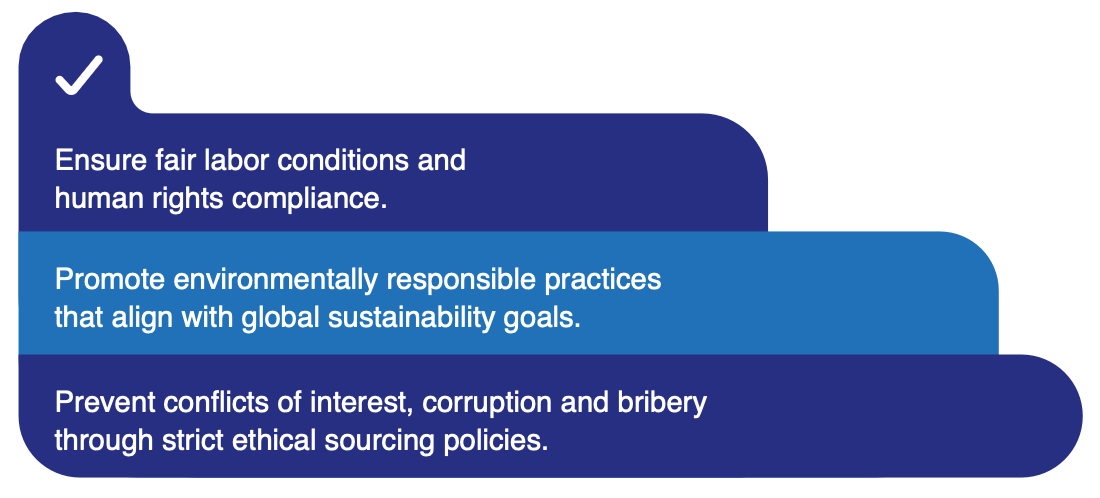
We have developed the Supplier Code of Conduct that articulates our expectations for ethical behavior, legal compliance and responsible practices among all our suppliers and subcontractors. Our Supplier Code of Conduct is a strong foundation for ensuring ethical and responsible supply chain practices. By aligning with international standards and the UN Global Compact, we are reinforcing sustainability, human rights and corporate responsibility across our network.
Our procurement strategy prioritizes suppliers who demonstrate a commitment to ESG best practices, ensuring that our supply chain supports our long-term sustainability objectives. Our systematic supplier screening process ensures that ESG considerations are embedded in our supply chain decisions. This proactive approach helps mitigate risks, improve compliance and drive sustainability across our operations. The approved list of suppliers is comprised of suppliers meeting financial integrity, legal integrity, reliability, material and service cost and delivery time predefined criteria. For significant key suppliers, ESG criteria have also been introduced.
Danaos’ commitment to supplier ESG compliance and transparency is a strong step toward responsible and sustainable operations. By integrating ESG principles into procurement and ensuring end-to-end visibility, we’re reinforcing ethical sourcing and carbon reduction efforts. The key strengths of this approach include comprehensive suppliers’ assessments that help us identify material risks and enforce ESG standards, public disclosure and transparency that strengthen stakeholder trust, integrated ESG procurement model embedding sustainability into supplier selection and strong focus on ethical and environmental standards addressing human rights, anti-corruption and carbon reduction.
Suppliers are requested to report on Scope 1+2 emissions among other ESG aspects in line with UN Global Compact and GRI standards. Within 2025, the 10% of the assessed suppliers shared the relevant Scope 1+2 emissions. Of course, there is work to be done to this respect, however the first steps have been successfully made to this direction. Our transparent sharing of Scope 1 & 2 emissions data with clients is a valuable step toward collaborative decarbonization. By enabling clients to assess their environmental impact within the value chain, we help drive informed decision-making and strategic refinements.
A structured ESG desk assessment verifies supplier adherence, ensuring commitments are supported by tangible evidence. The Danaos ESG Assessment Questionnaire, including ESG rating criteria, can be found in the following link: https://vq.danaosshipping.gr/?partner=11111111-2222-3333-4444-555555555555. Suppliers are requested to provide supporting evidence on their ESG policies, practices, performance and public disclosures. This information is then reviewed, resulting in an appraisal of the supplier’s ESG performance.
We have set prerequisites and mandatory criteria which, in case they are not fulfilled, the corresponding suppliers are removed from the approved suppliers list. Removing non-compliant suppliers reinforces accountability and strengthens our sustainable procurement framework. The 2025 assessment resulted in zero suppliers being excluded from the list.
Below is the summary of our suppliers’ screening results for 2025:
| Supplier Screening | 2024 | 2025 |
|---|---|---|
| Total number of Tier-1 suppliers | 268 | 289 |
| Total number of significant suppliers in Tier-1 | 122 | 110 |
| % of total spend on significant suppliers in Tier-1 | >90% | >90% |
| Total number of suppliers assessed via desk assessments | 81 | 54 |
| % of significant suppliers assessed | 65% | 49% |
Table 46: Suppliers’ screening results for 2024-2025
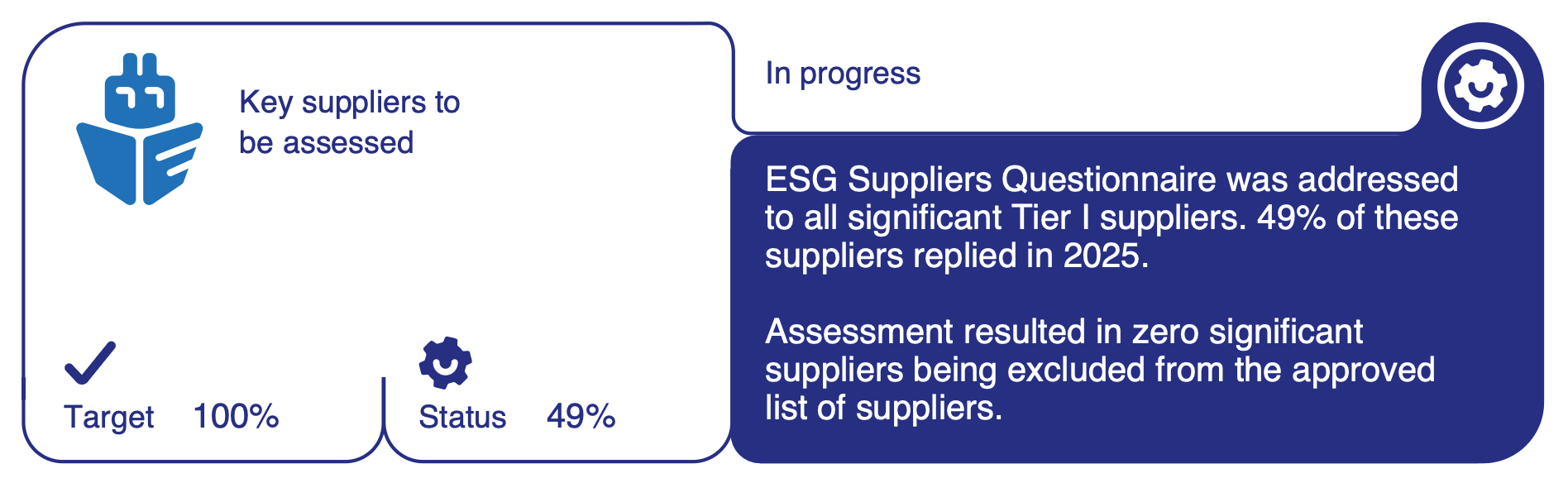
During 2025-year assessment, ESG questionnaire was distributed to 110 Significant Tier-1 suppliers (above $200k business and more than 20 personnel), representing more than 90% of total procurement spend. These suppliers include shipyards, spares, lub oil and paint suppliers, travel agents, insurers, etc. The response rate was 49%, as 54 responses were received. Non-responding suppliers will be further engaged as part of ongoing supplier engagement efforts. All respondents confirmed adherence to Danaos Code of Ethics, part of which is Danaos Supplier Code of Conduct.
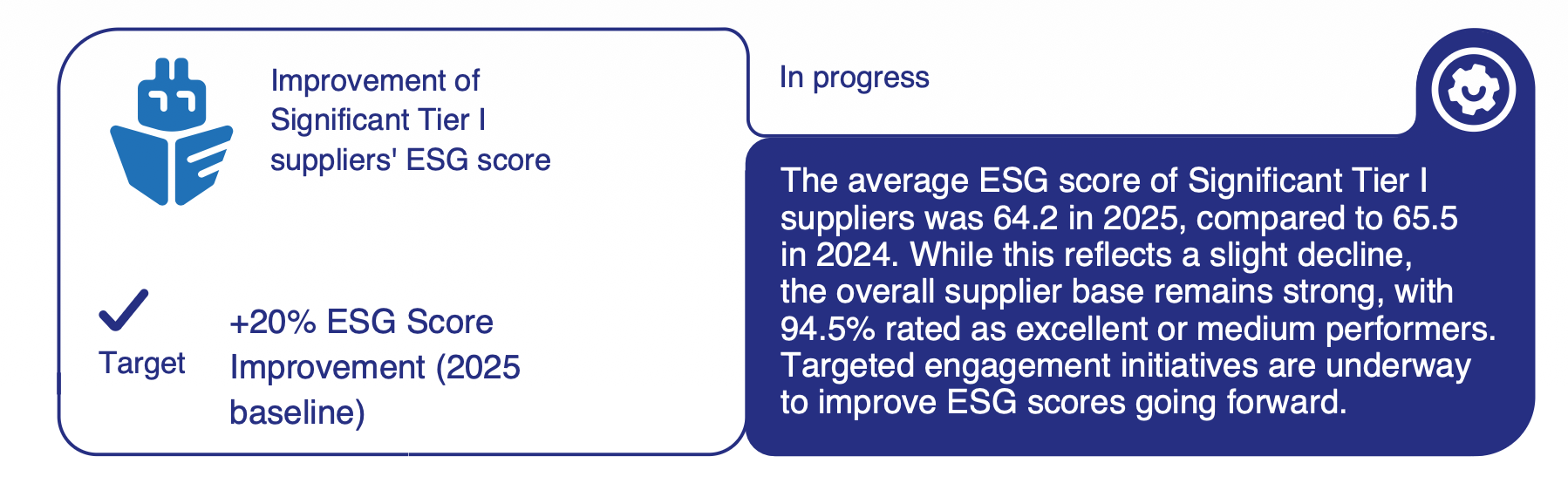
The foundation for integrating sustainable procurement into our ESG strategy was built in the previous years and in 2026-2028 we focus on scaling up our supplier engagement and improving assessment coverage. Since 2024, we have implemented a Supplier ESG Scorecard to systematically evaluate suppliers based on their ESG practices and performance and categorizes suppliers into performance tiers according to assessment results. In 2025, the ESG evaluation results showed continued strong performance across our supplier base. Of the 54 suppliers assessed, 16.7% achieved an excellent rating (Score 80-100), 77.8% were rated medium (Score 50-80), and 5.6% were identified as low performance (Score 30-50). Importantly, no suppliers were classified as poor performance in 2025 (Score<30).
Our approach to low-performing suppliers focuses on constructive engagement. We work collaboratively to identify root causes, agree on realistic and measurable corrective actions, and share best practice guidance. In 2025, engagement actions were completed with all low-performing suppliers to ensure they received appropriate support and guidance to strengthen their ESG practices. It is also worth noting that in previous year one supplier was initially identified as poor performance. Following a detailed review and validation process, this classification was revised due to incomplete information and clarification provided during reassessment. The supplier’s final performance was confirmed to be within acceptable standards (medium performance).
Customer Added Value Program
Our customer strategy is built on a spirit of partnership, with customer needs serving as the guiding compass for continuous improvement in our services. Our commitments are structured around defined focus areas and are set out in our “Customer Added-Value Program” methodology, published in 2025. This methodology incorporates the 2024 Customer Added Value Dashboard, which includes KPIs linked to each element that supports value creation for our customers. The related KPI results are updated annually and published in Q2 each year; the latest update was issued in 2025.
- Danaos Financial Integrity: Maintaining a strong financial position is essential to supporting long-term growth, innovation, and our ESG commitments. A solid financial foundation enables continued investment in efficiency, sustainability, and customer-focused improvements. Financial KPIs such as EBITDA serve as key indicators of the Company’s financial integrity, and together with our commitment to transparency, ethical business practices, and mutual trust-help establish a robust basis for long-term collaboration.
- Danaos Code of Business and Ethics: Danaos’ commitment to transparency, ethics, and fairness strengthens our reputation and supports trust-based partnerships with customers. Upholding these values contributes to long-term success and reinforces Danaos leadership in sustainable and responsible business practices. Every Company employee, including all officers, is responsible for conducting business in a manner that reflects a commitment to the highest standards of integrity.
- Reliability in the transportation of goods: Danaos has set a target of maintaining fleet utilization above 99% in relation to operational issues, and this target has been achieved every year for the past 10 years. By prioritizing uninterrupted, high-quality fleet operations, we enable safe, efficient, and timely transportation-key factors in maintaining customer trust and delivering value. This consistent performance further reinforces our operational excellence and competitive advantage.
- Professional Crew: Our target for crew retention is above 80%. As seafarers form the backbone of our operations, maintaining a competent, well-trained, and supported workforce is essential to safe and efficient vessel performance. We invest in crew development not only to strengthen safety outcomes, but also to enhance overall fleet performance.
- Optimizing Performance: The Danaos Low Carbon Transition Plan (LCTP) provides a comprehensive overview of our commitment to climate action and sets out our decarbonization strategy, which goes beyond the targets established by the IMO. It is a structured and ambitious framework designed to guide our pathway to decarbonization. By aligning with IMO targets, the IEA Sustainable Development Scenario (SDS), and the Paris Agreement, Danaos remains at the forefront of sustainable shipping. Our targets-50% carbon intensity reduction by 2030 and emissions neutrality goal by 2050-demonstrate strong leadership in the industry’s green transition. Danaos’ role as a strategic partner in decarbonization also strengthens customer relationships and reinforces our position as an industry leader in sustainability. By sharing our efforts and long-term vision, we create value beyond compliance and help our clients advance their sustainability goals efficiently.
- Transparency and Data Sharing: Danaos’ proactive approach to data sharing, transparency, and on-demand emissions verification is closely aligned with evolving EU ETS, FuelEU Maritime, UK ETS and IMO requirements. By ensuring compliance while using data to support strategic decision-making, we strengthen our ability to remain ahead in the decarbonization landscape. In parallel, our collaborative data-sharing model-supported through Joint Industry Projects (JIPs) and API development-represents an important step toward real-time performance optimization and improved route efficiency. By establishing a shared understanding of data and performance metrics with our clients, we enable more effective decision-making and support targeted emissions reductions.
- Sustainability Structure: At Danaos, sustainability is embedded in our corporate culture and serves as a key driver in our decision-making process. We are committed to publishing an updated ESG Report annually in accordance with GRI and SASB standards, and to disclosing data each year through CDP and the Corporate Sustainability Assessment (CSA). From an environmental perspective, and as part of our ESG strategy and enhanced engagement on sustainability, in 2024 we disclosed to CDP for the third time and reported to the S&P Global Corporate Sustainability Assessment for the second time. We communicate our commitments and progress toward achieving them in a transparent manner, and we are assessed and rated accordingly. Our pathway to meeting these commitments is set out in our Low Carbon Transition Plan (LCTP), which defines the roadmap and progressive steps toward our ultimate objective of carbon neutrality.
Customer Satisfaction
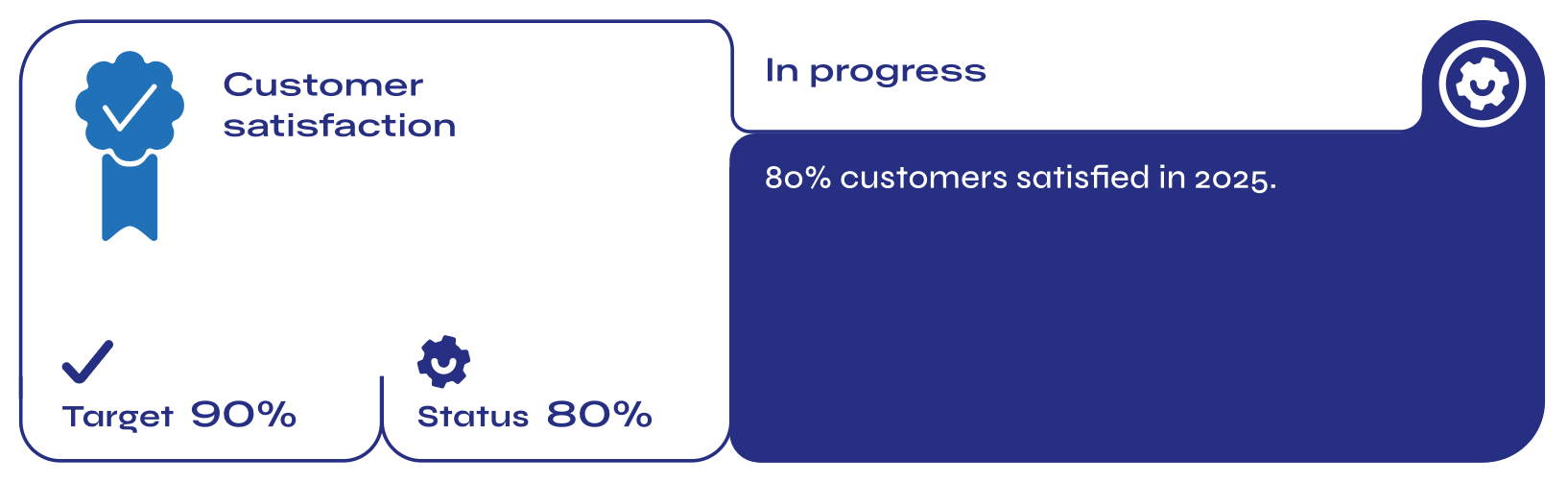
At Danaos, we are committed to honoring our commitments and charter party (C/P) agreements. Our digitalized performance monitoring and proactive issue detection reflect a strong focus on data accuracy, operational efficiency, and timely decision-making. By leveraging advanced analytics, we support continuous improvement and maintain alignment with industry standards. We engage directly with customers through meetings focused on action plans and long-term strategy, strengthening transparency, reinforcing partnerships, and ensuring alignment on sustainability and operational objectives. In addition, we align with our clients’ standards and participate in their benchmarking and sustainability assessments, further supporting continuous improvement and long-term collaboration. In 2023, we launched a customer satisfaction survey, which was restructured in 2024 to provide deeper insights into key performance indicators (KPIs) that capture customer perceptions of our service value.
Shipping Management and Performance
Danaos recognizes that effective risk management is integral to responsible shipping operations and long-term value creation for all stakeholders. The company’s Business Risk Management Procedure provides a structured approach to proactively identify, evaluate, mitigate, and monitor risks that could impact operational continuity, financial performance, regulatory compliance and the rights and well-being of all people connected to its activities.
Actual and potential impacts (positive and negative)
Danaos’ shipping operations have impacts on the economy, environment, and people, including emissions to air, operational safety, labor conditions and human rights across its fleet operations. Potential negative impacts may arise from environmental emissions, operational incidents, or non-compliance with labor and human rights standards, while positive impacts include efficient maritime transport services and continuous improvements in environmental operational performance. These impacts extend to employees, customers, suppliers, and communities, both directly through vessel operations and indirectly through the wider value chain. Positive impacts include efficient maritime transport services and improved environmental performance through operational optimization and emissions reduction initiatives. The Company is directly involved in these impacts through its vessel operations and indirectly through business relationships with suppliers, charterers and service providers across the maritime value chain.
Policies and commitments
Danaos has implemented a Human Rights Policy that promotes respect for human dignity, equality and labor rights, including freedom of association, fair wages and safe and healthy working conditions, while prohibiting child and forced labor. These commitments are embedded across operations and supported by compliance measures and continuous improvement practices. The Company also maintains a Stakeholder Engagement Policy to ensure transparency and trust with key stakeholders, supporting responsible management of impacts arising from shipping operations and related business relationships.
Actions taken
Danaos manages shipping-related impacts through a structured Business Risk Management Procedure covering proactive risk identification, evaluation, mitigation and continuous monitoring. ESG risks are regularly reviewed by the ESG Working Team. Operational controls, procedures, and compliance mechanisms are implemented across fleet activities to manage safety, environmental, and labor-related risks. The Company also provides digitally enabled access to vessel performance and emissions data to key stakeholders, particularly charterers, supporting transparency and regulatory compliance.
Tracking effectiveness
Effectiveness is monitored through key performance indicators including emissions intensity, fuel efficiency, safety performance, incident rates and compliance metrics. These indicators are reviewed regularly to support continuous improvement and alignment with regulatory and sustainability objectives. The risk management framework is further supported by internal audits and periodic independent reviews, with findings reported to senior management and the Audit Committee, to assess the effectiveness of mitigation actions and identify areas for further improvement.
Stakeholder engagement
Stakeholder engagement, particularly with charterers, regulators, classification societies and other maritime partners, informs Danaos’ approach to shipping management. Crew surveys, HR engagement meetings, charterer consultations on fuel preferences and emissions data, collaboration with classification societies and flag state administrations and participation in maritime decarbonization coalitions all contribute to the company’s understanding of material impacts and the adequacy of its mitigation measures. Feedback obtained through structured engagement and digital reporting tools supports continuous improvements in transparency, ESG reporting practices, and risk management effectiveness, ensuring alignment with stakeholder expectations and regulatory developments, and to evaluate whether the measures implemented effectively address identified impacts.